Blog

  • Mapping the Digital Frontier of Banking Trends

    Mapping the Digital Frontier of Banking Trends

    Digital Banking: Why the Old Way is Fading Fast

    The whole idea of “banking as a place you go” is pretty much over because banking is now just a service you use or even a background process that happens without you having to think about it much. We’re seeing this massive industry shift where money stuff isn’t stuck in its own bubble anymore since it’s now woven right into the fabric of our daily digital lives.

    • The Data Shift: Global fintech adoption has surpassed 75% among those who’re online, and AI-driven transactions now handle a massive share of real-time fraud detection.
    • The AI Reality: Most top-tier banks have moved way beyond those annoying basic chatbots to Agentic AI, which are systems that can actually make smart financial decisions for you.

    The Urgency: The market isn’t playing nice anymore, so banks clinging to clunky legacy structures aren’t just falling behind; they’re losing customers to digital-first rivals that prioritize speed and specialized services like credit score repair to keep their financial health in check.

    What Exactly is the Digital Frontier in Banking?

    Modern digital banking is a lot more than just a shiny app on your phone since it’s really about moving from a reactive service to proactive help. It basically means having every single banking service available through internet platforms and turning traditional things like checks and pay-in slips into purely digital formats.

    • Traditional vs. Digital Ecosystems: While old-school banks focus on physical vaults and paper trails, digital-first banks obsess over User Experience (UX) and making sure data flows instantly between different apps.
    • The Evolution: We’ve gone from Mobile Banking, where you just check your balance, to AI Banking that predicts your savings, and finally to Embedded Finance, where you get a loan right when you’re buying something on a website.
    • Key Components:
      • Neobanks: Fully digital institutions without any physical branches.
      • Open Banking APIs: The “glue” that lets your bank talk to your taxes or investment apps securely.
      • API Ecosystems: A whole network where different money tools work together perfectly to give you a full view of your wealth.

     Why Traditional Banking Models Are Falling Behind

    The “old way” is finally hitting a wall, and traditional banks are feeling the heat from four main directions that are making their lives difficult:

    • Legacy Infrastructure: Trying to handle Legacy System Modernization is a nightmare when your core is built on code from decades ago that wasn’t designed for the cloud.
    • Slow Customer Experience: In a world where we want everything now, waiting 48 hours for “processing” or a manual signature feels like an eternity.
    • High Operational Costs: Paying for thousands of physical branches and ATMs is becoming a huge money pit instead of a benefit, as more people prefer banking from home.
    • Fintech Disruption: Agile startups are picking off the best parts of banking, like payments and loans, and doing them way better with lower fees.
    ProblemImpactResult
    Outdated SystemsCan’t launch new featuresPeople leave for better apps
    Manual KYC ProcessesOnboarding takes daysPeople quit halfway through
    Rigid Data SilosNo personalized adviceLow user engagement
    High OverheadLower interest rates for youShrinking profits for banks

    To stay in the game, the industry is going all-in on these major trends that are changing how we handle money:

    1. AI & Machine Learning in Banking

    Banks are using Agentic AI for super-accurate credit scores and Robotic Process Automation (RPA) to handle all that boring back-office paperwork without any human errors. This means faster fraud detection and a bank that actually knows what you need before you even ask.

    2. Open Banking & APIs

    Supporting Data Democratization is huge because it allows you to see your whole financial life in one spot. It encourages third-party integrations so your banking data can help you get better deals on insurance or mortgages automatically.

    3. Blockchain & Decentralized Finance

    With the rise of Central Bank Digital Currencies (CBDCs) and the ISO 20022 Standard, sending money across borders is becoming instant and transparent, which used to take days and cost a fortune.

    4. Embedded Finance

    Banking is moving inside other apps, like when you see “Buy Now Pay Later” options while shopping online or getting car insurance directly through your car’s dashboard without ever calling a broker.

    5. Neobanks & Digital-Only Banks

    Institutions like those using a Cloud-Native Core allow for faster onboarding and significantly lower costs because they don’t have to pay for expensive real estate anymore.

    Scenario: A Digital Banking Experience

    Think about a person who is a freelancer trying to get a quick personal loan for a laptop upgrade.

    1. The Old Path: The person who goes to a traditional branch, and they ask for six months of physical bank statements and a salary slip, and then they tell them it’ll take a week just to review it.
    2. The Digital Path: The Person who logs into a digital-first app that uses Open Banking APIs to pull their history instantly. The AI-Powered-Debt-Recovery algorithms check the risk, and the person gets an approval in 5 minutes.
    3. The Result: The person who buys the laptop that same afternoon, and the traditional bank loses out on the interest because they are still busy printing their forms.

    The Verdict: Banks aren’t losing people because of their interest rates; they’re losing them because they can’t keep up with the clock.

    What Financial Institutions Must Do Now

    To survive the “Digital Frontier,” banks need to stop talking and start acting with this simple plan:

    1) Invest in Cloud-Native Tech:

    Stop trying to patch old systems and move to a cloud setup so you can grow fast and stay secure.

    2) Partner with Fintechs:

    Use Banking as a Service (BaaS) to put your services on other platforms where the customers already spend their time.

    3) Go Zero Trust:

    In a digital world, security has to be “never trust and always verify” using Biometric Authentication to stop high-tech hackers.

    4) Enhance the Experience:

    Focus on the “Phygital” mix by keeping the trust of a bank but giving it the speed of a startup.

     Benefits vs. Risks of Digital Banking

    BenefitsRisks
    Speed: Everything happens instantlyCybersecurity: New ways for hackers to get in
    Accessibility: Banking for everyone, anywhereData Privacy: Tons of sensitive info at risk
    Cost: Way lower fees for the userTech Gap: Leaving behind people who aren’t tech-savvy

    The Future of Banking in a Digital-First World

    We’re heading toward Invisible Banking, where you won’t even open a bank app anymore since your AI agent will be busy negotiating the best mortgage for you while you sleep. Super Apps will eventually handle your health, your travel, and your wealth in one single place, all secured by Behavioral Biometrics that are unique to how you hold your phone.

    Final Thoughts

    Digital banking is no longer optional for any institution that wants to exist in the long run. The structural shift in the industry is complete, and the banks that actually win will be the ones that see technology as the heart of their relationship with customers rather than just an expense.

    FAQs:

    1. What’s the big deal with Digital Transformation in banking this year?

    It’s basically about making things faster and more personal. Instead of just putting old banking services online, banks are using data to predict what you actually need. Whether it’s a smoother app or a loan that gets approved in minutes, the goal is to make managing your money feel like a natural part of your digital life rather than a chore.

    2. How exactly does AI in Banking help me as a customer?

    Think of it like having a smart assistant for your wallet. AI helps banks spot weird spending patterns to stop fraud early, and it also powers those “financial health” features that show you how to save better. It’s moving away from just answering basic questions and toward actually giving you personalized advice based on your real-life habits.

    3. Is my money actually safe with all these new Digital-First Banking apps?

    Security is the top priority right now. Most of these apps use cybersecurity tools that are actually more advanced than old-school banks, like facial recognition and behavioral tracking (which can tell if it’s really you based on how you hold your phone). Plus, they’re still regulated just like traditional banks, so your deposits are generally protected by the same insurance.

    4. What is the difference between Open Banking and Embedded Finance?

    They’re like two sides of the same coin. Open Banking is the “behind the scenes” part where you give your bank permission to share data with other apps. Embedded Finance is the result you see, like being able to pay for a pizza within a delivery app or getting an “easy monthly payment” option at online checkout without ever leaving the site.

    5. Does Sustainable Banking actually make a difference?

    Definitely. When you choose a bank that focuses on ESG in Finance, your money isn’t just sitting in a vault; it’s being used to fund things like solar farms, green housing, and small businesses. It’s a way to make sure your financial growth isn’t coming at the expense of the planet or the community.

  • All You Need to Know About Experian Credit Score

    All You Need to Know About Experian Credit Score

    The Experian credit score is a significant measure of your creditworthiness and overall financial health. If you’ve ever taken out a loan, applied for a line of credit, or even used a buy now pay later option, it’s likely that your Experian score was a key data point in their decision. If you’re considering a home purchase, funding educational and professional loans, applying for any kind of business, or even considering a car loan, knowing how the Experian credit score functions is critical.

    This complete guide is going to give you everything you need to know, from what an Experian credit score is, calculating what factors affect it, how to increase it, and how it compares to other credit scores, such as CIBIL.

    What is an Experian Credit Score?

    Experian is among the largest credit information companies globally, operating in more than 39 countries, and has provided credit information for 125 years. It was licensed to operate in India in 2010 and is registered with the Securities and Exchange Board of India (SEBI) and the Reserve Bank of India (RBI).

    Experian credit score is a three-digit score ranging from 300 to 900 that summarizes your credit history and repayment behavior. When you borrow money – such as through a personal loan, home loan, or your credit card – the bank or lender sends your repayment information to a credit information company, such as Experian.

    Experian analyzes that information and generates a credit score that reflects your creditworthiness. In other words, the Experian credit score will help lenders determine how likely you are to repay your debt on time.

    The Rationale Behind Lenders Checking Experian Credit Scores In The Loan Application Process

    If you have ever wondered why every bank or NBFC checks your credit score before providing you with a loan or credit, now you do!

    Lenders want to reduce their risk. When you have a high Experian credit score,+ this tells lenders that you are a responsible borrower who pays their bills on time with little debt, and the likelihood of your default is very low. With this in mind, it is easier for them to approve your application faster and give you much better terms.

    Some benefits of having a high Experian credit score include:

    • Fast approval of loans- paperwork is very minimal, and processing the loan will only take a couple of days.
    • Better rates- when you have a high Experian credit score, you will most likely get the best rate.
    • Higher limits- borrowers with a high Experian credit score often receive the highest limits for credit cards and personal loans.
    • Better negotiating position- if you are approved, your lender will agree to your request of extending your repayment term or simply lowering your EMIs.

    Experian also provides business credit reports for companies and businesses. More often, a lender will reference the Experian credit report for a company before extending a business loan, working capital, or credit facilities.

    What is a Good Experian Credit Score?

    Your credit score is a reflection of your financial discipline. Here’s how Experian classifies scores:

    Experian Score RangeCreditworthiness
    750 – 900Excellent
    700 – 749Good
    650 – 699Fair
    600 – 649Needs Improvement
    Below 600Immediate Action Needed

    In general, a score of 700 or above is considered good and sufficient for most credit products. However, if you aim for premium credit cards or low-interest home loans, staying above 750 is advisable.

    Elements That Influence Your Experian Score

    Getting to know what affects your Experian credit score is the first step to trying to improve it. Here are the elements:

    1. Credit Payment History

    Payment history contributes the largest share to your overall credit score computation. Timely payments on EMIs and credit card bill payments help to improve your score; delayed or missed payments will negatively affect your score.

    Tip: Always keep reminders or turn on auto-pay on EMIs and credit card dues.

    2. Number of Credit Enquiries

    When you apply for a loan or credit card, the lender checks your credit report with a hard inquiry. When your credit report has multiple inquiries made within a short amount of time, the lender sees “credit hunger” which will set a negative tone for your credit score.

    Personal inquiries of checking your credit report (the soft inquiry) do not have a negative effect on your credit health.

    3. Percentage of Unsecured Loans

    The higher the percentage of unsecured loans – for example, personal loans – compared to secured loans (home or car loans) is seen as risky.

    Keeping a healthy mix of credit: secured loans, unsecured loans, and credit cards will help improve your credit score.

    4. Errors in Experian Credit Report

    Sometimes banks or NBFCs report the wrong data. For example, taking a loan that was marked as “settled,” when the loan was actually closed, would lower your score for no reason.

    Make it a habit to check your credit report regularly, and if you see inaccuracies, file a dispute with Experian.

    5. Credit Utilization Ratio (CUR)

    CUR demonstrates how much credit you are utilizing as against the total limit available. For best practice, keep your CUR less than 30%. For instance, if your limit across cards is ₹1,00,000, you should be looking to spend less than ₹30,000 in any one month’s billing cycle.

    A high CUR has been known to indicate a reliance on credit and therefore drop your score.

    6. Status of Old Loans

    ‘Settled’ or unpaid old loans that are not closed on your report hamper your creditworthiness. Paying off old dues and closing the loan accounts is therefore positively rewarding on your score.

    7. Credit Age

    The longer you have had credit, the better. Closing old credit cards (accounts) reduces your credit age, which may impact your score slightly.

    Tip: Leave old credit cards four active every month with a small transaction payable each month.

    What’s Involved in an Experian Credit Report 

    Your Experian credit report is a comprehensive report that lenders use to consider your financial behaviours. Key details include: 

    • Account History – This is a list of your credit accounts, balances, repayment history (for up to 36 months), including the lender’s name. 
    • Personal Information – This is your name, date of birth, PAN, address, and contact information. 
    • Credit Summary – This is the summary of your accounts, including currently open accounts (if any) and the status of old accounts, indicating total outstanding balances.

    How to Verify Your Experian Credit Score

    Regularly confirming your Experian credit score is one of the smartest things you can do for your financial health. It helps you keep track of your credit score, spot any errors early, and make better loan application decisions.

    The Reserve Bank of India (RBI) states that each citizen is entitled to one free report from each bureau every 12 months – including Experian. So you can verify your Experian credit score for free at least once a year, without cost or impact on your credit score.

    Here’s how you can verify your Experian credit score online and offline:

    How to Check Experian Credit Score Online

    Viewing your credit score online is the quickest and easiest method, taking only a few minutes throughout the entire process.

    Step 1: Visit the Experian Website

    Go to the official Experian India website. On the homepage, there will be a prominent link for Free Credit Score, usually at the top left. Click on it.

    Step 2: Register Yourself

    You will be taken to a page where you can create a new account by clicking register now (only if you don’t have one already) or you can simply log in (if you already have an account).

    Step 3: Enter Your Mobile Number

    You will need to enter your valid mobile number and click send OTP. In just a moment, because you will receive a 6-digit One Time Password (OTP) on your mobile phone that you will enter into the screen and click verify.

    Step 4: Fill in Personal Details

    You will be asked for details, such as:

    • Full Name (as on PAN card)
    • Date of Birth
    • Gender
    • Email ID
    • Residential Address
    • Identification Number (either PAN, Aadhaar, Passport, Voter ID, Driving License or Ration card)
    • Identification Number

    Make sure all details are correct, your identity will not match up.

    Step 5: Accept the Declaration

    Click the declaration checkbox that states all provided information is correct, and click Get Report.

    Step 6: View and Download

    Your Experian Credit Report will appear immediately on your screen. You may either check it out online, or you can click on the “Download Report” button to access it in PDF form for reference.

    Tip: The above process to check your credit score is considered a soft inquiry and will not affect your score.

    Steps to check your Experian Credit Score in Offline mode

    If you prefer the physical or paper-based way, or if you need a physical report, you may request on the offline mode.

    Step 1: Download the Request form

    Go to the Experian India website and download the Credit Report Request form. Please print it out.

    Step 2: Supporting documents

    You will need to attach self-attested copies of the documents mentioned below:

    Proof of identity

    • PAN card, Aadhaar card, Passport, or Voter ID.
    • Proof of Address
    • Utility bill statement or Aadhaar card with address and recent bank.

    Step 3: Payment

    If you are requesting more than one report in one financial year, you will have to pay ₹399 + GST as the fee. You need to make such a payment in the form of a Demand Draft drawn on Experian Credit Information Company of India Pvt. Ltd.

    Step 4: Send the Documents

    Send the duly filled form along with the supporting documents and your payment to the address at Experian Credit Information Company of India Pvt. Ltd.
    5th Floor, East Wing, Tower 3, Equinox Business Park,
    LBS Marg, Kurla (W), Mumbai – 400070, India.

    Once Experian processes your request, the physical credit report will be sent to your registered address.

    Ways to Keep Your Experian Credit Score Healthy

    Your credit score isn’t just a one-time accomplishment – it needs ongoing maintenance. Here is an elaborate list to maintain your good Experian credit score to help you build and maintain a healthy Experian credit score:

    Pay your EMIs and credit card bills on time

    • Never miss a payment – A single inadequate payment can harm your score.
    • Set such payments on autopay or you can call upon the reminder feature on your devices – it can become exhausting trying to remember all of it.

    Avoid taking on too much debt

    • Sometimes it can be easy to miss and simply miscalculate your debt to your total income if your income level is fluctuating. 
    • Only take what you can handle. 

    Keep old credit cards open

    • If you were to close old accounts, this would shorten your overall credit history, which can, in turn, cause a decline in your score.
    • Use old credit cards on small purchases and pay it off immediately; this can keep the accounts active yet manageable.

    Regularly check your credit reports

    • To assist you in making sure there are no errors, fraudulent accounts, or incorrect status of your loans, paid off or active.
    • If flagged, be sure to dispute it immediately so it can be amended as soon as possible.

    Have a variety of Credit Types 

    A credit mix matters; having a healthy mix of secured loans (Home/Car Loans) to unsecured loans (Credit Cards, Personal Loans) has improved credibility. 

    Keep CUR at or below 30%

    • Example: If your credit limit is ₹1,00,000, use no more than ₹30,000.
    • Try not to have too many loan queries run in a small time span
    • Too many hard queries, all in 2 or 3 months, can lead to disruptions.

    Plan Loans in Advance

    Before borrowing any money, calculate your estimated monthly installments (EMIs), so you don’t experience pressure to repay it.

    If You Can Avoid, Do Not “Settle” Loans

    Loan settlements notated as partially paid can hurt your credit score. Make sure to close the loan account by paying off the loan in full.

    Contact a Financial Advisor if You Want to

    If your score is low enough, a professional can help you with credit and likely credit score improvement.

    How to Get a Loan with a Bad Experian Score

    If your Experian score is below 600, it is likely your application will be rejected by most of the traditional lenders. Still, you have other avenues to acquire funds:

    NBFC Loans: Non-Banking Financial Companies often have less formal standards than banks to evaluate bad credit. Therefore, applying for a loan at an NBFC can be considered to acquire funds with a slightly higher interest rate.

    Secured Loans: Offer the lender collateral such as gold, a fixed deposit, or property, to minimize the lender’s risk.

    Peer-to-Peer (P2P) Lending: Sign up for a P2P lending platform such as Faircent or Lendbox and allow them to find individual investors to fund your loan on their platform.

    Apply with a Guarantor/Co-Applicant: Find one person with a strong credit score to apply with you as a co-applicant, or as a guarantor.

    Informal Loan Borrowing: Consider asking family and friends, or borrowing from crowdfunding sources, only if you will pay it back.

    Experian Credit Score vs. CIBIL Credit Score

    Both Experian and CIBIL are SEBI-licensed credit bureaus, but here’s how they differ:

    AspectExperianCIBIL
    Score Range300 – 900300 – 900
    AdoptionGrowing, used by banks and NBFCsWidely adopted (90% of banks use CIBIL)
    Calculation ModelDifferent weightage on factors like utilization, mixA slightly different model may yield different scores
    AvailabilityOne free report every 12 monthsOne free report every 12 months

    Because the models differ, your Experian and CIBIL scores may not match. Checking both can give a more accurate view of your credit health.

    Conclusion

    A good Experian score will lead to better financial outcomes. It will allow you to secure loan approvals faster, to access higher loan amounts and credit limits, and ultimately to secure financial products at lower interest and EMIs. With a good score, you will not only have better negotiating power with lenders, but you will also be able to provide fewer documents to the lender.

    If you have a poor score, then work towards stepping up and achieving a solid score – this includes paying your bills and EMIs on time, keeping your credit utilization ratio as low as possible, and monitoring your credit report for any errors on an ongoing basis. You will find that your score improves over time following a planned routine, hence achieving greater financial freedom and security.

    FAQs

    1. How frequently should I review my Experian credit score?

    Generally, it is ideal to review your Experian score at least once every 3-6 months or before applying for a large personal loan or credit card. It is a good strategy to regularly monitor your score so that any errors can be dealt with promptly

    2. Does reviewing my own credit score decrease it?

    When you review your own credit score, this is classified as a soft inquiry, and this will not affect your actual score. Only the hard or actual inquiries made by lenders when you apply for credit will have a temporary effect on your score.

    3. What is a good Experian credit score range?

    Credit scores from Experian will usually be between 300 and 900. A score above 750 is generally considered good and will help you qualify for loans and credit cards on favorable terms.

    4. How long will it take to improve a low credit score?

    It will likely take anywhere from 6-12 months of expected diligence, such as consistently paying bills on time, maintaining low credit usage, and not applying for too many loans at once, to see a measurable change in your score.

    5. Can I get a loan with a low Experian credit score?

    Yes. However, your options will be limited. You might want to consider a secured loan, NBFC loans that are more lenient with their eligibility guidelines, or apply for a credit loan with a guarantor/co-applicant to boost the likelihood of success.

  • Green Banking: Sustainable Practices for the Financial Industry

    Green Banking: Sustainable Practices for the Financial Industry

    In recent years, the global push towards sustainability has prompted industries of all kinds to reevaluate their practices and their impact on the environment. One sector that plays a crucial role in this transition is banking. As financial institutions wield significant influence through their investments and operations, the concept of “green banking” has emerged as a beacon of hope for a more sustainable future.

    Understanding Green Banking

    Green banking, also known as sustainable banking or ethical banking, revolves around integrating environmental and social criteria into financial decision-making processes. This approach aims to ensure that banking activities contribute positively to environmental sustainability and societal well-being. Key principles of green banking include:

    Environmental Risk Management: Assessing and managing risks associated with environmental factors in lending and investment decisions. This involves evaluating the environmental impact of projects and businesses seeking funding.

    Promoting Green Products and Services: Offering financial products and services that support environmentally friendly initiatives. This can include green loans for renewable energy projects, green mortgages for energy-efficient homes, and incentives for sustainable businesses.

    Adopting Responsible Investment Practices: Incorporating environmental, social, and governance (ESG) criteria into investment strategies. This encourages investments in companies that demonstrate responsible environmental practices and social accountability.

    Reducing Carbon Footprint: Implementing measures to reduce the environmental impact of banking operations. This includes energy-efficient buildings, paperless transactions, and sustainable supply chain practices.

    Benefits of Green Banking

    The adoption of green banking practices offers several benefits to both financial institutions and society at large:

    Risk Mitigation: By considering environmental factors, banks can mitigate risks associated with climate change and environmental degradation, thereby safeguarding their investments.

    Enhanced Reputation: Demonstrating commitment to sustainability enhances a bank’s reputation and attractiveness to environmentally conscious customers and investors.

    Cost Savings: Implementing energy-efficient practices and reducing paper usage can lead to cost savings over time.

    Stimulating Green Innovation: By financing green projects and businesses, banks play a crucial role in stimulating innovation in renewable energy, clean technology, and sustainable agriculture.

    Contributing to Global Goals: Green banking aligns with international goals such as the United Nations Sustainable Development Goals (SDGs) and the Paris Agreement, fostering global efforts to combat climate change and achieve sustainable development.

    Challenges and the Way Forward

    Despite the numerous benefits, green banking faces challenges such as regulatory hurdles, data limitations, and the need for standardized reporting frameworks. Addressing these challenges requires collaboration among financial institutions, regulators, and stakeholders to establish clear guidelines and metrics for measuring environmental impact and sustainability performance.

    As we move forward, the role of green banking in shaping a sustainable future cannot be overstated. It represents a pivotal shift towards integrating environmental responsibility into the core of financial decision-making. By embracing green banking practices, financial institutions can not only mitigate risks and enhance profitability but also contribute meaningfully to global efforts towards environmental stewardship and social equity.

    Conclusion:

    green banking is not just a concept but a transformative approach that holds the promise of creating a more resilient and sustainable financial industry. Through collective action and commitment, we can harness the power of finance to build a greener, more inclusive economy for generations to come.

    Frequently Asked Questions

    1. How does green banking differ from traditional banking?

    Traditional banking primarily focuses on financial risk and profitability. While green banking still pursues profit, it adds a “triple bottom line” approach: People, Planet, and Profit. It integrates Environmental, Social, and Governance (ESG) criteria into every loan, investment, and internal operation, ensuring that financial success doesn’t come at an environmental cost.

    2. Can individual customers participate in green banking?

    Absolutely. Individuals can contribute by:

    • Switching to paperless billing and digital statements.
    • Opening accounts with banks that divest from fossil fuels.
    • Applying for “Green Loans” or “Green Mortgages,” which offer lower interest rates for energy-efficient home improvements or electric vehicle purchases.

    3. What is “Greenwashing” in the banking sector?

    Greenwashing occurs when a financial institution spends more time and money marketing itself as environmentally friendly than actually implementing sustainable practices. For example, a bank might promote a small “green bond” while simultaneously providing massive secret funding for coal mining. Standardized reporting frameworks are currently being developed to help consumers spot these discrepancies.

    4. Is green banking more expensive for the consumer?

    Generally, no. In many cases, it can be cheaper. Because green projects (like solar installations or energy-efficient retrofitting) often reduce long-term operational costs and risks, banks frequently offer preferential interest rates or fee waivers to encourage these sustainable choices.

    5. What are ESG criteria, and why do they matter to my bank?

    ESG stands for Environmental, Social, and Governance.

    • Environmental: Climate change, carbon emissions, and biodiversity.
    • Social: Labor practices, diversity, and community impact.
    • Governance: Board diversity, executive pay, and ethics. Banks use these metrics to determine the “health” and longevity of a company. A company with poor ESG scores is considered a higher risk for long-term investment.

    6. Does green banking actually help the environment?

    Yes, by shifting the “flow of money.” Banks are the gatekeepers of capital; when they prioritize sustainable projects, they make it easier for green industries to scale and harder for heavy polluters to operate. This financial pressure is one of the most effective tools for accelerating the global transition to a low-carbon economy.

  • Debt Collection Decoded: Stop Negativity and Reclaim Peace

    Debt Collection Decoded: Stop Negativity and Reclaim Peace

    Breaking the Fear Around Debt Collection

    If you’re living it right now, you should know that an enormous number of people are dealing with the same thing. The relentless calls. The vague threats. The pressure that bleeds into your personal life and messes with your sleep, focus, and mood.

    Here’s what nobody tells you, though you actually have a lot more control in this situation than debt collectors want you to believe. There are rules about what they can and cannot do. Tools are sitting in your corner that most people never use. And there is a real way out of this – not just on paper but in your head too. This guide will walk you through it all. No confusing legal jargon. No vague advice. Just what you actually need to know and what you can start doing today.

    What Is Debt Collection?

    Debt collection is basically the process of someone trying to get money back from you on an account that’s past due. Simple enough. But two very different types of people might be calling you. First-party collectors work directly for the original creditor, the bank or lender you borrowed from in the first place. Third-party collectors are a different story. These are separate agencies that either got hired by your creditor or actually bought your debt outright, usually for pennies on the dollar.

    That distinction matters more than most people realize. When a third-party collector buys your debt cheaply, they have a huge financial incentive to squeeze as much out of you as possible. That’s why Debt collection agency conduct tends to feel so much more aggressive than hearing from your actual lender. It’s not personal; it’s a business model.

    And here’s something worth understanding about how debts move around. When an account gets sold, the ownership transfers through what’s called a “chain of title,” a documented trail showing who owns the debt at any given point. That chain matters legally, and it becomes relevant when you start asking for proof of what you actually have to pay back.

    What Makes a Debt Collector “Aggressive”?

    Most people know something feels off, but they can’t always name exactly what’s happening. So let’s name it.

    Aggressive collection behavior includes things like calling repeatedly at odd hours, early in the morning, or late at night. It includes threatening a legal summons when there’s no legal action actually being filed. It includes implying criminal consequences that simply don’t exist in debt collection situations. It includes contacting your family members or your employer. And it includes language meant to intimidate you into panicking and paying before you’ve had a chance to think straight.

    The first practical thing you can do even before you respond to anyone, is start harassment documentation. Write down every call. The date. The time. The name of whoever spoke to you. What they said. Keep those notes somewhere safe. This record becomes your evidence if things go sideways and you need to file a complaint or walk into a courtroom.

    Your Rights: The Part They Hope You Don’t Read

    Consumer rights in debt collection are legally protected, and they’re stronger than most people realize. The Fair Debt Collection Practices Act, commonly referred to as the FDCPA, is the federal law in the US that draws a very clear line around what third-party collectors are allowed to do. The short version is that harassment, deception, and unfair pressure are all off the table.

    Collectors cannot call you before 8 AM or after 9 PM. They cannot use abusive or threatening language. They cannot pretend to be attorneys or government officials when they’re not. They cannot threaten legal action; they have no intention of actually taking it. They cannot share your debt information with other people, your family, your coworkers, or your neighbors, with very limited exceptions.

    There’s also something called a time-barred debt that a lot of people get tripped up on. Every debt has a statute of limitations, a legal window during which a creditor can actually sue you to collect. Once that window closes, the debt is considered time-barred. Collectors may still try to reach you, but they lose the right to take you to court over it. If they’re pursuing you on a time-barred debt without disclosing that fact, that’s a violation of your rights under the FDCPA.

    On your side of the equation, you can send a debt verification request, also called a debt validation letter, that requires the collector to prove the debt belongs to you and is legitimate. You can send a cease and desist letter telling them to stop contacting you altogether. You can challenge anything inaccurate on your credit report through a credit report dispute. These aren’t just theoretical options. They work when you use them correctly.

    How to Actually Deal With Aggressive Collectors – Step by Step

    Stay calm first: Collectors are trained to create urgency because panic leads to quick decisions that usually benefit them, not you. Take a breath. You don’t have to respond in the moment.

    Request a debt verification request in writing before you do anything else: Ask them to send you a full itemized statement showing what you have to pay back, how it was calculated, and who the original creditor was. Ask for documentation proving the chain of title, meaning they actually have the legal right to collect this debt. Until they provide that verification, they’re required to pause collection activity. This one step alone stops a lot of calls fast.

    Document everything: Every single interaction. Calls, texts, letters – log the date, time, name, and content. Your harassment documentation file is your protection if things escalate.

    Send a cease and desist letter if you need breathing room: This tells them in writing to stop contacting you. They can still pursue the debt through legal channels, but the direct pressure has to stop. Put everything in writing and keep copies.

    Negotiate if the debt checks out: If the debt is verified as yours and it’s within the statute of limitations, a debt settlement agreement is often a realistic option. Many collectors will accept less than the full amount, especially on older accounts. The key rule here is that you get that agreement in writing before any money moves. A verbal promise in this context is worth nothing.

    Get professional help when you need it: There’s no prize for figuring this out alone. A credit counselor, financial advisor, or attorney can change the outcome significantly. We work with people who feel buried under debt situations, helping them understand what they’re actually dealing with legally and financially and building a real plan to move forward.

    Mistakes That Make Things Worse

    A lot of people unknowingly make their situation harder. Here’s what to watch out for.

    Ignoring collectors completely is one of the most common mistakes. The calls don’t stop, and the problem doesn’t disappear. Worse, if a collector takes you to court and you don’t respond, a default judgment can be entered against you. That gives them legal tools like wage garnishment that they didn’t have before. Paying without verifying the debt first is another big one. If you pay before requesting a debt validation letter, you might be handing money to a scammer or settling something that you actually have to pay back

    Sharing too much personal information on calls is risky. Your bank account details, your employer information, and your assets none of that belongs in a conversation with a third-party collector unless a court has ordered otherwise. And reacting emotionally usually makes things worse. An angry response or a panicked verbal agreement can create problems that take months to undo.

    Stopping the Negativity – Mental and Financial Reset

    Debt is a financial problem, but what it does to your mental state is something else entirely. The shame piece is real. People carry it quietly for months, sometimes years. But here’s the thing: your debt situation is not a reflection of your character or your future. It’s a set of circumstances. Circumstances change when you take informed action.

    The fastest way to reduce anxiety around debt is to stop avoiding the full picture. Write it down. What actual amount due? To whom? The interest rate. The status of each account. That clarity, even when the numbers feel scary, is always better than the vague dread of not knowing.

    Pay attention to the credit score impact as you work through this. Settled accounts are paid in full; account disputes affect your score differently, and understanding that helps you make smarter decisions about what to prioritize.

    If a collector has threatened you with a legal summons that never materializes or collected on a time-barred debt without disclosure or ignored your continued contacting people in your life about your debt, those are potential FDCPA violations, and you have grounds to act.

    File a complaint with the Consumer Financial Protection Bureau or the FTC. If the behavior is severe or ongoing, consult a consumer rights attorney. Under the FDCPA successful claims can actually result in the collector covering your legal fees, so the financial barrier to pursuing this is lower than most people expect.

    FAQs

    1) Can debt collectors legally harass you?

    No. The Fair Debt Collection Practices Act prohibits harassment, threats, abusive language, and deceptive tactics. If you’re experiencing any of that, document it and file a complaint.

    2) How do I get debt collectors to stop calling?

    Send a written cease and desist letter. Once they receive it, they’re legally required to stop direct contact, though it doesn’t erase the debt itself.

    3) What is a debt validation letter?

    It’s your written debt verification request asking the collector to prove the debt is real and belongs to you, including an itemized statement and documentation showing the chain of title from the original creditor.

    4) What happens if I ignore collectors?

    The debt doesn’t go away. Ignored accounts can result in a default judgment in court, which opens the door to wage garnishment and a serious credit score impact. Engaging, even just to request validation, is almost always the better move.

    5) Can collectors contact my family or employer?

    Generally no. They can only reach out to other people to locate you, and they cannot discuss your debt with them. That’s a protected consumer right.

    6) How do I handle a scam collector?

    Always request written proof of debt first. Legitimate collectors will send documentation. If they refuse or the numbers don’t add up, verify the company independently before paying anything.

    7) Should I settle or pay in full?

    It depends on your situation. A debt settlement agreement can reduce what you have to pay back, but it typically shows on your credit report differently than a paid-in-full account. Talk to a financial advisor before making that call.

  • 5 THINGS A DEBT COLLECTOR FORBIDDEN TO DO

    5 THINGS A DEBT COLLECTOR FORBIDDEN TO DO

    Most of us dislike receiving a phone call from a debt collector. It can be unpleasant at times, but if a debt collector doesn’t follow the regulations, it’s likely that they’re counting on you not understanding your rights. Don’t let a debt collector pressure you into doing something you don’t want to do – discover your legal rights under the Fair Debt Collection Practices Act and speak up to predatory collectors.

    The following five practices are not allowed to be done by debt collectors. You’ll be able to firmly argue for yourself once you understand what they are. Let’s take a look at a few. Let’s check out those:

    Debt Collectors Are Not Allowed To Publicize About You And Your Debt

    Debt collectors are prohibited by law from disclosing or threatening to disclose information about your debt. They are allowed to contact your friends, neighbors, employer, and other contacts once to locate you, but they are not allowed to provide specifics about your debt to anybody else, and they are not allowed to contact anyone other than you more than once (unless that person gives permission). When it comes to your job, debt collectors are not authorized to threaten your job or withhold your salary unless a court orders it.

    Debt Collectors Are Not Allowed To Arrest You Or Haul You Into Court

    Debt collectors can’t threaten to do anything to you that they don’t have the legal authority to do, which could include suing you if they don’t have the legal right to challenge you. They cannot threaten to arrest you or bring you to court because you are unable to pay your debts. Threats to get you arrested for “check fraud” are also a red flag that you’re dealing with an unauthorized collector or a scammer.

    Debt Collectors Are Not Allowed To Say That Your Credit Score Will Be Negatively Affected 

    Debt collectors are not allowed to threaten you with a poor credit report or credit score if you do not pay them right away, and they are also not allowed to misrepresent themselves as working for a credit reporting agency to panic you.

    Debt Collectors Are Not Allowed To Call You Before 8 A.M. Or After 9 P.M

    Collection agencies are not allowed to call you before 8 a.m. or after 9 p.m., and they must cease calling you at work if you ask them to (orally or in writing). You also have the right to request the collector to stop communicating with you while you are at the workplace. Your request to stop contacting them must be in writing, so prepare a copy and send the original by certified mail so you know it was received. Your debt isn’t gone once they’ve done so, but they can’t contact you unless they’re pursuing particular legal action, such as filing a lawsuit.

    Debt Collectors Are Not Allowed To Contact You Written Notice Of The Debt

    Demand written notice of the debt as soon as a debt collector contacts you for the first time. Within five days of initial contact, a collector must deliver this notice, which includes the amount of the debt, the name of the creditor, and a statement of your right to challenge the claim. Don’t take any action until you’ve received confirmation that your debt is legitimate and that they’re not trying to defraud you.

    If you inquire, debt collectors must also reveal the name of the company for which they work. If you dispute a debt in writing, the collection agency is required to stop contacting you until the debt is verified in writing.

    Final Thoughts

    Just because you owe money doesn’t mean you deserve to be treated badly, so if you’re behind on your debts, make sure to understand your rights. If a debt collector does go too far, you should speak with an attorney about your options.

    If you’re looking for more information about debt collection laws, check out our guide on a brief overview of debt collection laws.

    Quick Answers to Your Questions

    1) Can they walk into my home?

    Absolutely not. They cannot enter your property without your permission. Even if you let them in, they have to act civil. They aren’t allowed to march in and start seizing things.

    2) What do I do if they are being abusive?

    Document it. Get the call details and the name of the person. That proof is your best weapon when you go to the authorities or the Banking Ombudsman.

    3) Can they grab my car or my house without notice?

    No way. Laws like the SARFAESI Act require a clear notice period before anyone can touch your secured assets. They can’t just show up and tow your car without following the proper legal steps first.

    4) Can I get rid of that “Settled” status on my credit report?

    It takes some work, but it’s possible. Getting your debt properly closed and snagging that No Objection Certificate (NOC) is key to cleaning up your credit history.

    5) Is Kenstone Capital able to help with this?

    We’re here to help you bridge that gap between your current situation and a clean financial slate. We focus on fair and ethical ways to get your finances back on track because nobody should be bullied while trying to fix their debt.

  • Liquidity Adjustment Facility (LAF) – Full Form, Meaning, and Detailed Explanation

    Liquidity Adjustment Facility (LAF) – Full Form, Meaning, and Detailed Explanation

    Full Form of LAF: Liquidity Adjustment Facility

    LAF Liquidity Adjustment Facility (LAF) is a monetary policy tool used by the Reserve Bank of India (RBI) to aid banks in case of any liquidity crisis or when they fail to meet the fund requirements. The LAF runs a cushion for commercial banks and financial institutions as it acts to open a window to borrow from the RBI on condition of falling short of funds, or parking unwanted surplus funds lying with the RBI without any return. This way, it assists in efficient cash flow management, financial stability, and effective implementation of the monetary policy.

    The LAF commands widespread attention in an economy like India’s, where liquidity requirements vary daily as a result of loan disbursals, seasonal demand, government operations, and other day-to-day needs.

    What Does LAF Mean in the Context of Banking?

    LAF is something that people use in the banking world. The term LAF stands for Liquidity Adjustment Facility, which is a tool that banks use to manage money. In terms of LAF is a way for banks to borrow or lend money to each other or to the central bank to make sure they have enough cash to do their daily business.

    This helps the banks to keep a balance of money so they can give loans to people and businesses, and also meet their own needs. So LAF is a part of how banks work, and it helps to keep the banking system running smoothly. The bank has something called the Liquidity Adjustment Facility or LAF for short, which is a tool to deal with short-term liquidity risks simply and efficiently.

    Banks have to handle a lot of money every day. This can be a real challenge. The amount of cash that banks have can go up and down a lot. If they do not manage this properly, it can cause big problems with the way the bank operates. This can then affect the bank’s ability to lend money, settle transactions, and keep the system stable. The Liquidity Adjustment Facility is a way to make things more stable. It does this in two ways:

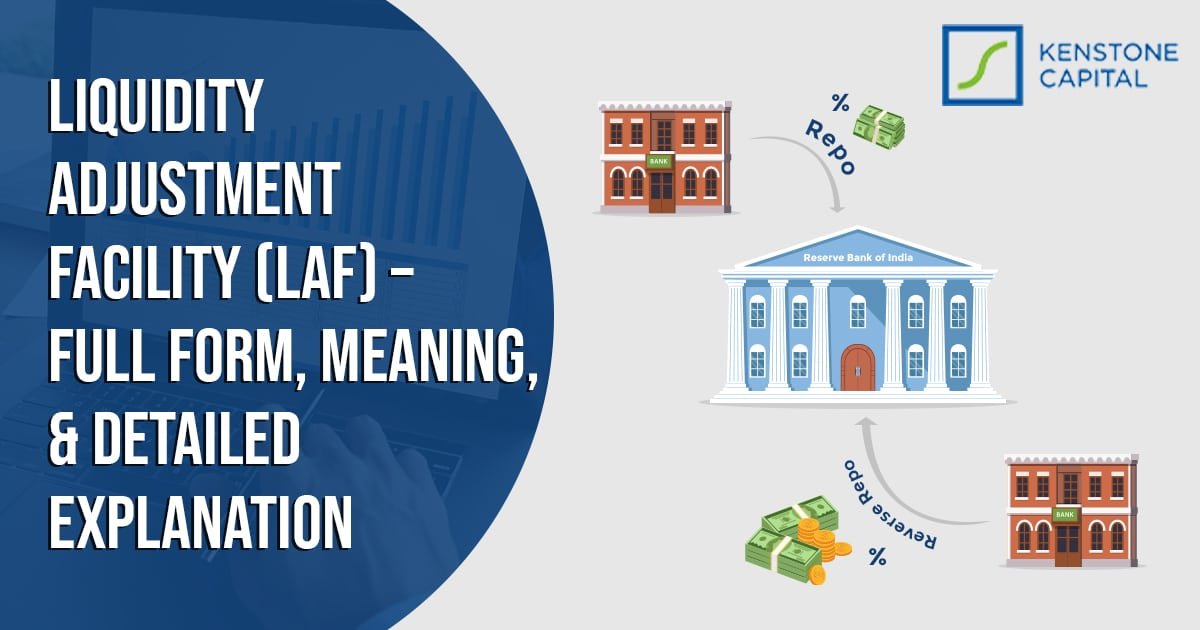
    1. Repo Operations:

    The Reserve Bank of India has a system where banks can borrow money from the Reserve Bank of India using government securities that the Reserve Bank of India approves of. These borrowings are usually for a period of time. The Reserve Bank of India loans money to banks for a short time, like just one night or for a maximum of 14 days. This helps banks when they do not have cash.

    The Reserve Bank of India helps banks a lot when people need cash, like at the end of the quarter or during festivals. The Reserve Bank of India also helps banks when they are having problems. The Reserve Bank of India is very important for banks during these times. Banks borrow money from the Reserve Bank of India to cover their cash shortages.

    2. Reverse Repo:

    Banks have some money they can put that money with the Central Bank, which is the Reserve Bank of India, and they will get some interest on it. This interest is called the reverse repo rate. So when banks do this, some money is taken out of the system. This helps to balance the amount of money that’s available. The Central Bank uses reverse repo to control the money supply.

    A reverse repo is a useful tool for the Central Bank. It helps to prevent much money from being in the system, which can cause prices to go up, and that is called inflation. The Reserve Bank of India uses reverse repo to make sure that the money supply is just right, and the Reserve Bank of India does this to prevent inflation.

    LAF enables banks to be operationally efficient, mitigate the risk of short-term funding, and help maintain order in the financial system through such mechanisms as described above.

    How the Liquidity Adjustment Facility Works

    LAF operations revolve around a straightforward yet very efficient system for handling short-term liquidity:

    Collateral-Based Borrowing through Repo Operations

    In the case of a momentary shortage of liquidity, a bank is allowed to take a loan from the RBI by providing securities of the government that are eligible for the purpose of collateral. This procedure, called a repo agreement, usually covers a period of a few days, starting from overnight up to 14 days.

    Through the repo, a bank can take a short-term cash bridge without having to liquidate its long-term investments. The interest is charged at the repo rate, which is determined by the RBI and is influenced by market conditions and the monetary policy. Through repo operations, banks get a chance to continue lending and have smooth operations even in the case of financial stress or during seasonal spikes in cash demand.

    Parking Surplus Funds through Reverse Repo

    Bank holding extra cash in the form of surplus liquidity can place the extra funds with the RBI under a reverse repo agreement and at the same time gain interest at the prevailing reverse repo rate. By means of this instrument, banks are permitted to carry out their idle funds profitably, while at the same time, the excess liquidity is absorbed from the system, thus preventing oversupply of money that leads to inflation.

    Reverse repo operations are the instruments that provide banks with the opportunity to maintain a balanced liquidity position and, at the same time, get some returns safely while they are supporting the stability of the system.

    Daily Auctions by the RBI

    The Reserve Bank of India does something called LAF operations every day. They have auctions where banks can come and borrow money if they need it or put in money if they have money to spare.

    The Reserve Bank of India uses this auction system, so everything is out in the open and fair. It helps them make sure money is being used in the most effective way possible, and they can keep a close eye on what is going on with money in the country.

    By doing these operations, the Reserve Bank of India can control the interest rates that banks use when they lend money to each other. This helps to keep the money market stable, which is very important for the Reserve Bank of India and for the country’s economy. The Reserve Bank of India uses the LAF operations to make sure everything runs smoothly.

    System-Wide Impact of LAF

    LAF transactions affect the entire banking system by directly influencing liquidity, short-term credit availability, and interest rates. By providing a structured framework for banks to manage daily cash flows, LAF ensures smooth lending, operational efficiency, and stability in interbank markets. Beyond supporting day-to-day banking, LAF serves as a strategic tool for the RBI to implement monetary policy, stabilize short-term interest rates, and foster confidence in India’s financial system.

    Key Features of LAF

    The Liquidity Adjustment Facility (LAF) is a boon not only to banks but also to the economy at large. It consists of certain essential features that enable it to function effectively. These features cooperate to ensure that banks have money to lend, interest rates do not fluctuate wildly, and people can still get money when they need it. Let’s examine each component of the Liquidity Adjustment Facility in detail.

    Short-Term Liquidity Management

    LAF mainly serves the short-term liquidity requirements of banks, the duration being generally overnight, 7-day, or 14-day. Banks daily cash flow is affected in different ways, and that is why they experience daily fluctuations in cash flow. The factors responsible for these fluctuations are customer withdrawals, loan disbursements, interbank settlements, and government transactions.

    The Liquidity Adjustment Facility, or LAF, is very significant for banks. In the absence of the Liquidity Adjustment Facility, banks could find themselves in a difficult situation when they are short of money for a brief period of time.

    This can lead to problems in the way the banking system operates and make it difficult for people to get loans. The Liquidity Adjustment Facility supports banks by allowing them to borrow money for a period or to deposit surplus money. In this way, banks can continue to work and deal with times when there are temporary cash shortages, and meet regulatory requirements such as the cash reserve ratio (CRR). This short-term focus provides a critical buffer for operational stability.

    Dynamic Interest Rates

    The repo and reverse repo rates under LAF are dynamic. They change based on the RBI monetary policy and current market conditions. This system promotes disciplined liquidity management. It works in a similar regulatory environment where banks must follow RBI guidelines for debt collection to ensure transparency and compliance.

    When the repo rate is high, banks do not borrow and put excess funds in reverse repo at a better Return. Lower the repo rate, lower the cost of borrowing. Banks subsequently procure funds from the RBI for liquidity over the short term. The structure maintains equilibrium in the market.

    It influences banks’ criteria for borrowing and lending. The result corresponds to general economic aims such as inflation management, credit expansion, financial restraint, and economic stimulation.

    Execution Effectiveness

    By providing daily modification of banks’ liquidity positions, LAF is critical to the sound functioning of the banking system. Routine adaptability allows banks to: Prevent cash deficiencies that might interfere with credit, settlement, or customer dealings. Ensure that idling funds are actively employed to avoid any deterioration in financial return.

    Through exact daily control of the liquidity, LAF supports continuous banking operations, smooth interbank dealings, and improved financial planning. Such efficiency of operations also mitigates the contingency of emergency borrowing at a costlier rate, aiding the banks to remain profitable and abide by regulatory prescriptions.

    Equilibrium in Money Markets

    LAF primarily ensures stability in the money markets. LAF shapes the interbank (call money and notice money) and short-term (up to 14 days) interest rates by deploying the instruments of repo and reverse repo so that the volatility in the market rates over the day is checked. Consistent rates:

    •          Increase assurance of banks and financial bodies.

    •          Guarantee consistency in immediate borrowings and lendings.

    •          Facilitate efficient pass-through of monetary policy to the economy.

    Without LAF, abrupt liquidity demand or supply shocks might result in extremely volatile interest rates, disturbing banks, corporates, and investors. LAF’s stabilization guarantees the credibility of the short-term money markets, facilitating seamless economic operations and system-wide strength.

    Economic Influence of LAF

    LAF is a major monetary policy tool, besides being a liquidity management tool. Its activities immediately affect the circulation of credit, the rates of interest, and the whole of economic activity.

    1. Throughout Elevated Inflation Periods:

    • Boosted repo rate by the RBI, that inflate the cost of borrowing from banks.
    • More expensive credit depresses credit to firms and households, checks inflation, and stabilizes prices in the economy.

    2. During Economic Slowdown:

    • The Reserve Bank of India lowers the repo rate, which means it is cheaper for banks to borrow money from the Reserve Bank of India. This is a help for the banks because they can get the money they need at a lower cost. The Reserve Bank of India does this to help the banks and the people who need to borrow money. The Reserve Bank of India is trying to make it easier for people to get loans and for businesses to grow.
    • This helps businesses to get loans and invest in things, which makes them grow and do more business, and that is good for the economy because it helps when things are slow.

    In April 2019, some people who study the economy thought that the Reserve Bank of India, or the RBI, would lower the repo rate by 25 basis points. They did this because the RBI wanted to deal with inflation, slow economic growth, and weak global demand for things. When the economy started to get better, the RBI was expected to raise the repo rates by 2020. The reason for this was to keep prices stable. The RBI had to make sure that the economy was growing at a good pace and that prices were not rising too fast. The RBI and the economy are very important, so the RBI had to make decisions about the repo rates to help the economy and the RBI.

    Through such mechanisms, LAF not only provides operational support to banks but also becomes a strategic tool for the RBI to influence economic growth and inflation levels.

    Why LAF is Important for Banks and the Economy – Detailed Explanation

    The Liquidity Adjustment Facility is really important for banks in India. It does a lot more than just help banks with their work. The Liquidity Adjustment Facility is a part of keeping the financial system in India stable and running smoothly. It also helps the banks work well. Helps the government make economic policies that work. We can see how important the Liquidity Adjustment Facility is when we look at how banks do their day-to-day work and also when we look at the picture of the whole economy in India.

    1. Liquidity Cushion

    Banks have to deal with changes in the money that comes in and goes out every day. This happens because of things like people taking out cash, banks giving out loans, and the government doing transactions. Banks also have things they need to pay for.

    The Liquidity Adjustment Facility is a way for banks to get the money they need for a time when they do not have enough. Banks can borrow this money. They can put the extra money they have into the facility.

    By doing this, banks can keep everything running smoothly. They do not have to do things that might not be their choice just because they need money quickly. They also do not have to borrow money at rates that’re too high. Banks can use the Liquidity Adjustment Facility to borrow money through something called a repo agreement. They can put extra money into it through a reverse repo. This cushion is particularly critical during periods of financial stress, seasonal demand spikes, or sudden market disruptions, helping banks maintain uninterrupted credit availability and operational stability.

    2. Monetary Policy Support

    LAF is one of the main tools with which the RBI carries out its monetary policy. By changing the repo and reverse repo rates, the RBI can influence the cost and availability of credit in the banking system. As an illustration:

    In times of high inflation, an increase in the LAF repo rate discourages excessive borrowing, thus controlling the supply of money and the growth of prices. In a period of economic downturn, a reduction in the repo rate makes a short-term loan less expensive, thus encouraging businesses to invest and therefore increasing economic activity. By these means, the LAF serves as a channel for the RBI to manage short-term liquidity, control interest rates, and indirectly influence inflation, investments, and consumption patterns in the economy.

    3. Financial Discipline Encourages

    The well-defined LAF framework helps banks to be responsible for the management of their liquidity situation and refrain from seeking LAF in an unplanned or emergency manner. Banks are encouraged to have enough liquid cash to prepare for their daily cash flow and to closely monitor their short-term funding needs. The mentioned financial discipline reduces the risk of sudden liquidity crises, guarantees compliance with regulatory requirements, and entails the banking sector’s stability. Basically, LAF is not only a device to offer temporary respite, but it also contributes to banks’ long-term operational prudence.

    4. Supports Digital and Modern Banking

    The shift towards digital transactions, fintech platforms, and the Digital Rupee has collectively made it essential for banks to maintain efficient liquidity. In order to execute digital payments, extend loans, and carry out banking, related technological innovations, banks need to be able to acquire short-term funds without any hurdles. Through the banker’s liquidity window, the banks can continue to function effortlessly in a contemporary, driven financial environment while abiding by the ever-changing regulatory frameworks, such as the RBI rules for digital lending apps. Aside from this, it is an important measure towards increasing operational efficiency and, consequently, customer trust and confidence in banking services.

    Broader Implications of LAF

    The Liquidity Adjustment Facility (LAF) plays a vital role in shaping India’s financial and economic stability. Its impact goes far beyond providing day-to-day liquidity to banks. Through its repo and reverse repo mechanisms, the RBI influences how money flows through the system, how interest rates behave, and how financial institutions make decisions about lending, borrowing, and investment. These effects can be felt across the wider economy, making LAF a central tool in the RBI’s monetary policy framework.

    Stabilizing Interest Rates Across the Economy

    Interest rate stability is one of the major consequences of LAF. By adding or removing liquidity as necessary, the RBI keeps short-term interest rates from showing sudden spikes or drops. Such stability is very important to banks because it gives them the opportunity to plan their lending activities with more certainty. Borrowers are also in a good position with predictable interest rates, making loans and credit products more manageable. Without LAF, the financial system would be more volatile, thus, borrowing would be riskier and more expensive for businesses and individuals.

    Supporting Sustainable Credit Growth

    Moreover, LAF is instrumental in achieving stable and sustainable credit growth. In times of banking sector liquidity shortages, banks can have recourse to the repo operations, thus, can continue issuing loans to consumers and businesses. The absence of such situations in economic activities such as business expansion, consumer purchases, and investment is ensured. When there is excess liquidity in the market, reverse repo operations enable banks to park funds with the RBI, thus avoiding loans that are uncontrolled or speculative. Hence, LAF is a credit growth tool that works in harmony with broader macroeconomic objectives and keeps the money flowing in a responsible way.

    Enabling Efficient Capital Allocation

    Efficient capital allocation is a consequential benefit of the LAF framework. Banks are prompted to deploy funds more productively, thereby deciding between lending, investing in government securities, or depositing surplus liquidity with the RBI. This process removes the practice of keeping funds idle and ensures that financial resources are utilized in areas where they bring value to the economy. As liquidity conditions change, banks modify their strategies, thus bringing back the sector-wide discipline and accountability.

    Boosting Confidence in the Banking System

    LAF is a significant factor in trust and stability within the banking ecosystem. Banks become confident that they will be able to handle sudden liquidity pressures through the RBI’s mechanisms. Hence, there is a reduction in panic, emergency asset sales, and unpredictable disruptions. A stable liquidity environment is a source of reassurance for investors, depositors, and borrowers, and thus, they receive an unambiguous signal that the RBI is actively supporting market balance. With enhanced confidence, the financial system is less vulnerable to shocks, whether domestic or global.

    Why the LAF Framework Matters for the Economy

    The Liquidity Adjustment Facility is not only a technical monetary tool. It affects interest rates, choices of lending, use of capital, financial discipline, and market sentiment. Its major effects, therefore, help economic stability, keep the banking sector safe, and make India’s financial system capable of responding to market fluctuations and uncertainties. As a result, LAF represents a core instrument in the RBI’s monetary policy plan and continuously contributes to the strengthening of India’s economic framework.

    Conclusion

    The Liquidity Adjustment Facility (LAF) is far from being only a short-term funding tool. It is a strategic instrument that supports the stability of India’s banking system, facilitates the RBI’s monetary policy goals, and makes it possible for banks to function efficiently in a changing financial environment. The knowledge of LAF is vital for banking professionals, financial analysts, policymakers, and any individuals interested in the financial ecosystem of India.

    Frequently Asked Questions (FAQs)

    1. What exactly is the Liquidity Adjustment Facility (LAF)?

    The LAF is a technical tool used by the Reserve Bank of India (RBI) to manage the amount of money circulating in the banking system. It allows commercial banks to borrow money from the RBI when they face a cash shortage or park their extra cash with the RBI when they have a surplus. Think of it as a “financial breathing valve” that keeps the banking system balanced.

    2. How do “Repo” and “Reverse Repo” fit into the LAF?

    These are the two main gears of the LAF.

    • Repo (Repurchase Option): This is when a bank borrows money from the RBI by pledging government securities as collateral.
    • Reverse Repo: This is the opposite-banks deposit their excess money with the RBI to earn a safe interest rate.

    3. Why is the LAF important for the average person?

    While the LAF happens between banks and the RBI, it directly affects your wallet. If the RBI raises the Repo rate through the LAF, it becomes more expensive for banks to borrow money. As a result, banks often increase interest rates on home loans, car loans, and personal loans for consumers.

    4. How does the RBI use the LAF to control inflation?

    When prices are rising too fast (inflation), the RBI increases the Repo rate. This makes borrowing expensive, which reduces the money supply in the economy and cools down spending. Conversely, during a slowdown, the RBI lowers the rate to encourage banks to lend more and stimulate growth.

    5. Is the LAF a long-term loan for banks?

    No, the LAF is strictly for short-term “liquidity” needs. Borrowing through this facility usually lasts anywhere from just one night (overnight) up to 14 days. It is designed to help banks handle daily fluctuations, like a sudden spike in customer withdrawals or seasonal demand during festivals.

    6. What serves as collateral when a bank borrows through the LAF?

    Banks cannot just borrow on a handshake. They must provide “approved government securities” (like G-Secs or Treasury Bills) as collateral. This ensures that the RBI’s lending is secure and that banks maintain a disciplined portfolio of high-quality assets.

    7. How does the LAF promote “Financial Discipline” in banks?

    Because the LAF has specific rules and requires collateral, it encourages banks to plan their cash flows carefully. Banks that manage their money well don’t have to rely on the RBI’s “emergency” windows at higher costs, which leads to a more stable and predictable banking sector for everyone.

    8. Does the shift to Digital Banking affect the LAF?

    Yes. With the rise of UPI, fintech, and the Digital Rupee, money moves faster than ever before. Banks now need to be even more precise with their cash management to handle instant 24/7 transactions. The LAF provides the necessary “cushion” to ensure that digital payments and lending apps run smoothly without running out of underlying liquidity.
  • Three Things to Know Before You Sue a Client

    Three Things to Know Before You Sue a Client

    Most likely, at some point in your business field, someone will owe you money. You can still be waiting for payment after going through the collections process. You might decide that suing the defendant in small claims court is your only option for getting this money. But reality frequently differs greatly from what is portrayed in the most alluring courtroom scenes.

    A lawsuit for debt collection can be severe, intricate, and time-consuming. If the dispute isn’t resolved amicably and you proceed to litigation, you’ll face more costs, a higher contingency fee, and perhaps even more worry and annoyance. Preventing an escalation of the situation is the best line of action. Here are three tactics to consider before you take a significant loss or prosecute a client for non-payment.

    1. Know About Alternative Options

    Many people believe that litigation is the only option available when it comes to debt recovery. However, there are other choices that are just as successful as taking a client to court.

    • Settlements

    Settlement is a wise move when the insolvent business is about to file for bankruptcy or close. Customers are able to get some of the outstanding debt back this way before it’s too late. Remember that a settlement only makes the debtor responsible for a percentage of the entire amount owed, necessitating a reduction in the creditor’s demand.

    • Voluntary Payment Plan 

    An additional alternative to think about is a voluntary payment plan. The debtor settles their outstanding balance in installments, which enables businesses to recover their money without incurring further fees from litigation and frequently more quickly than suing and obtaining a judgment.

    2. Be Aware Of How Long The Process Takes

    Before entering the litigation process, you should be aware of how long the process takes.

    a. Default Judgment – It can take up to four to six months to obtain a default judgment when the debtor does not contest the litigation. When there are problems and/or delays, it sometimes takes nine months or longer. Most courts are much more overloaded as a result of the pandemic. New York’s lower courts are still delaying the issuance of rulings and setting trial dates.

    b. The Serving Process – Serving the debtor with official notice of the case is one of the most frequent problems clients run into during the litigation process. Until the client is formally informed of the litigation, no judgment can be granted in the case. People, therefore, run away and hide to avoid getting the filing. Until there is proof that the company is aware of the lawsuit, the litigation process will continue to drag on. The process typically takes six months or longer from the day the complaint was filed if we have to serve the organization through the Secretary of State.

    c. The Delay Game – Debtors will instruct their attorneys to postpone the trial as long as they can. It is a generally established technique that might take up to a year to complete, despite being unfair to the creditor. Before or after the judgment is issued, this puts pressure on the creditor to accept less than the whole amount.

    d. Judgment – The court normally issues the final Judgment two to six months after the trial. The formal judgment collection procedure can then start, which could take months or years.

    3. Determining Expected ROI

    When deciding whether to sue a customer for debt, consumers should evaluate their projected return on investment (ROI). But how are you going to achieve that?

    Before beginning the legal procedure, make a list of your prospective expenses, turnaround time, potential return (amount of debt paid back after contingency fees), and the possibility of receiving the return. Using an expected value equation, clients can determine if investing in a lawsuit against a debtor will yield a worthwhile return. To calculate the expected value, we normally take into account 3 options: 0 return, 100% of principal, fewer charges and fees, and a settlement amount. For each option, we give a probability. There is minimal financial motivation to file a lawsuit if the predicted ROI is marginally higher or lower than the sum that was received.

    Bottom Line

    Although it may be tempting to file a lawsuit against a customer right away to recover any outstanding debt, this is not how the legal system actually operates. It costs money and requires a lot of patience to sue using a contingency lawyer, and there is no assurance that the debt will be collected.

    Before filing a lawsuit against a client, weigh your options, the time commitment, the cost of fighting the case, and the expected return on investment. Give us a call if you want to talk about whether it’s appropriate to sue your client or not or if you want to talk about alternatives to suing a client. We’re pleased to go over the benefits and drawbacks with you so you can decide what is best for your situation.

    FAQ

    1) How long does it take to sue a client for unpaid debt?

    The legal process can be lengthy and may take several months to years. Even in straightforward cases, obtaining a judgment can take 4-6 months or longer, and delays such as serving notice or court backlogs can extend the timeline significantly.

    2) What challenges can arise during the litigation process?

    Common challenges include difficulty in serving legal notice, intentional delays by the debtor, and prolonged court proceedings. Debtors may avoid receiving notices or use legal tactics to delay the case, which increases both time and cost for the creditor.

    3) How do I decide if suing a client is financially worth it?

    You should evaluate the return on investment (ROI) before proceeding. This involves estimating legal costs, time involved, probability of recovery, and the final amount you may receive after fees. If the expected return is low, alternative options like settlements or payment plans may be more practical.

    4) What should I consider before suing a client for unpaid dues?

    Before taking legal action, you should assess whether the debt is clearly documented, legally enforceable, and worth the time and cost involved. It’s also important to review contracts, invoices, and communication records to ensure you have strong evidence to support your claim.

  • Key Benefits of Choosing a Paperless Personal Loan

    Key Benefits of Choosing a Paperless Personal Loan

    Taking a personal loan was once a slow and laborious process. People had to go to banks, stand in queues, and submit quite a lot of paperwork, including identity proof, salary slips, and bank statements. They had to wait for days or sometimes weeks, even after all this, to get a response.

    It is a system that still leaves a lot of people – especially those unfamiliar with banking or who have no money to spare – feeling harried and confused. One error in the form or a missing document would set everything back. Things, however, are different now in the era of digital services. In short, a paperless personal loan is one where the entire process can be completed online. Apply from the comfort of your home, upload your documents digitally, and receive approval in a fraction of the time. This has opened up lending to many more people today who are taking Personal loans for planned needs like weddings, travel, or major life events.

    What Is a Paperless Personal Loan?

    A paperless personal loan is a loan that doesn’t require you to provide paper documents. From beginning to end, it’s all done on your phone or computer. Previously, you would take a printout of your documents and submit them to the bank. Upload these documents to a paperless environment. Using encrypted digital systems, your identity and financial information are verified.

    You can, for example, verify identity with Aadhaar or PAN, and you can verify your income with bank statements. This eliminates human intervention and increases the pace. In layman’s language, a Paperless Personal Loan Application is a loan application that involves no paperwork and is the quickest way to obtain money from a bank.

    How Does a Paperless Personal Loan Work?

    The paperless personal loan application process is straightforward, even when you are applying for a loan for the first time. Everything takes place online, so the process is faster and less confusing.

    1) Filling out the application

    The first step is to fill out a paperless loan application online on the lender’s website or app. You need to fill in some basic information like your name, mobile number, date of birth, income , and job details. Certain services will also inquire about your monthly payments or loans you already have. This allows the lender to assess your financial status and determine how much loan you can afford. The format is generally straightforward, and most sites will clearly direct you so you don’t get lost while filling it.

    2) Uploading your documents

    You need to upload your documents after entering your basic information. These normally are your proof of identity, proof of address, and proof of income. For instance, you might be required to upload your Aadhaar card, PAN card, salary slips, or bank statements. Just take a picture or upload a scanned copy instead of submitting hard copies. Many platforms specify what documents are needed and offer guidance, meaning that even those not particularly confident when it comes to handling things online can manage.

    3) Digital verification of your details

    You provide the documents, and the lender takes a look at your information with the help of digital tools. This can be OTP verification on your mobile number, Aadhaar-based eKYC, or account-based verification with your bank. These protocols enable a prompt verification of your identity and financial information.

    Unlike traditional loans, which require multiple people to do manual verification, this process is automated and is much faster and more accurate.

    4) Check your eligibility and apply with one simple application

    After verification, the lender reviews your eligibility to avail of the loan. The decision is taken on the basis of your income, your ability to repay, and your previous credit history. Since this entire process is automatic, nothing can take up a lot of your time. Several platforms render an instant paperless loan decision, wherein you get to know the result in minutes. If you qualify, you will also be able to see how much loan you can get, the interest rate, and the repayment period.

    5) Accepting the loan offer

    At the end of the process, you’ll have a chance to carefully review all the terms before going any further. This consists of the principal quantity, the interest, the monthly installments, and the duration of repayment. You can accept the offer online if you like the terms. In most cases, you will be issued a digital contract to which you can confirm with an OTP or even sign your contract electronically, and after this step, your loan will be on its way.

    6) Disbursal of funds

    Once you accept a loan offer, the last step is getting the money. The sanctioned loan amount is credited directly to your bank account. This procedure is generally quite quick. In many cases, the funds are being credited within a few hours or even on the same day. This speedy transfer of funds is also one of the major reasons why people opt for an instant, paperless personal loan, especially in a hurry.

    Paperless loans have gained popularity as they address multiple common issues. People want things faster nowadays. Waiting for several days is really not comfortable, especially in a crisis. Approval is faster with paperless loans, and money can be disbursed sooner.

    They are much more convenient. You don’t have to go to a bank or rearrange your schedule. You can apply from anywhere at any time. With the rising usage of smartphones and digital services, it is no wonder that online paperless loans are widely available for users.

    Advantages of a Paperless Personal Loan at a Glance

    In general, a personal loan offers many benefits, and if you are choosing to move forward with a paperless personal loan, you can benefit from:

    A) Quick processing and approvals

    Loans go through a lot of checks, but traditional loans do take time because everything gets checked manually. This slows the process down. In fact, with paperless loans, most of the verification is done automatically. It enables the lenders to attend to the applications in the fastest way. In most cases, they can get a paperless personal loan approved instantly on the same day.

    B) No forms to fill out and less work

    Processing physical papers can be exhausting and tedious. An online paperless loan takes away the hassle of submitting your documents physically. All you have to do is upload your documents online, and you’re saving both time and energy.

    C) Convenience and flexibility

    These days, getting a loan means going to a bank after hours. There seems to be no end to the number of places now offering the paperless personal loan online. The pace is just right whether you’re at work, home, or on the road.

    D) Easy access to cash

    Once your loan is approved, the money is credited directly to your bank account. Often, it will be a matter of hours. That’s what makes a paperless instant loan so appealing for those facing financial emergencies.


    E) Simplified and streamlined workflow

    Paperless loan websites are built to be user-friendly. The instructions are simple to follow, and so are the forms. Even a tech novice can easily apply for a paperless loan online.

    F) Clarity and insight

    Transparency is an essential part of the online platform, as you can see the interest rate, tenure, monthly payments, etc. With this, you can now make an informed decision and select the right paperless personal loan for you.

    G) Safe and secure procedure

    Trusted lenders employ sophisticated security systems to protect your personal information. With OTP verification, encrypted platforms, and more, your data is safe. It is safe to apply for a paperless loan online if you get it from a trustworthy provider.

    E) Environment-friendly option 

    Paperless loans help to cut down on paper, printing, and storing physical documents. This means they are a more green-friendly alternative to the usual process of loan applications.

    Different Categories of Paperless Personal Loans

    There are many types of paperless loans, depending on what you need to borrow the money for. Knowing these types can guide you properly. A regular personal loan is the most common. You could utilize it for many things, including medical bills, school, travel, or home repairs. The entire procedure is still digital.

    A quick loan is intended for rapid approval and speedy disbursal. An immediate paperless loan online comes in handy when you are in dire need of money and can’t afford to wait for the slow procedure. Short-term loans are also available. These are usually smaller loan amounts and are to be repaid in a short time. They are good for making immediate payments.

    Some lenders give pre-approved loans. These are the loans that are given to borrowers who already have an established relationship with the lender. Getting approved is even quicker because your information is already there. In some instances, even big loans, such as a paperless home loan, are mostly a digital process. Most of the work can be done online with a paperless loan, but you will still need to prove some things in person.

    Things To Watch Out for Before Applying for a Paperless Personal Loan

    It is important to be cautious in your approach towards a paperless personal loan, even though it does make the process of borrowing money speedy and hassle-free. Because the process is quick, a lot of people will apply without reading the fine print and understanding the terms, which can cause headaches down the road.

    A few minutes spent checking out the important facts will spare you headaches.

    1) Clearly know the interest rate

    The first thing you want to look for is the interest rate. Instant loans and other paperless loans can sometimes have higher interest rates than traditional loans. They are simply approved in a matter of minutes, usually without much human intervention. Know how much the cost is before you apply. Because even a tiny rate difference can add up to hundreds of dollars in your total repayment.

    2) Check the full cost of your loan.

    Many people just bring their attention to the sum borrowed and not to the other costs. In addition to interest, there could be other common personal loan charges, such as a processing fee, late payment charges, or any other hidden costs. These may add to the amount you need to pay back overall. Cover the entire cost before accepting a paperless loan online so you have no surprises later.

    3) Understand your repayment capability.

    You should always borrow what you can repay comfortably. Consider your monthly income and your spending before applying. Ensure you can pay the monthly installments in a timely manner without having to make cuts to your daily necessities. Late payments can incur fines and damage your credit score as well.

    4)Verify your eligibility and review your credit profile.

    Check the factors that determine your loan eligibility. The lenders evaluate your income, employment status, and credit information to determine whether to approve your loan.

    Although it might be the case that you can still get a loan with a low credit score, the interest rate may be higher. You can check your eligibility prior to applying for a paperless personal loan online, and this would help you save from getting rejected.

    5)Use a reputable and reliable platform.

    Therefore, you must make sure that you apply through a trusted lender, and value for your money. Always verify the authenticity of the website/app. Check for appropriate security measures, and don’t share your personal information on websites or with companies you aren’t familiar with or that seem suspicious. Using a reputable provider makes sure all your information is kept safe.

    6)Read the terms and conditions very carefully.

    The terms and conditions of end users go unread by the majority, which leads to issues further down the line. Check all the details for the loan, like the duration of repayment, penalties, whether a processing fee is applicable, etc., before taking it. Being aware of such terms ensures that you will not have any unpleasant surprises during the loan period.

    7)Verify the loan amount and tenure.

    Don’t rush while taking decision on the loan amount and duration of repayment. Borrowing a larger amount may have its benefits, but it could be the burden of repaying your loans. Similarly, a shorter tenure may mean less interest but higher EMIs. Select an option that tapers off both and what you are comfortable with financially.

    8)Do not apply for multiple loans in quick succession.

    There is also an impact on your credit profile when you apply for several loans all at once. Lenders might take this as a sign of financial trouble, and it may hinder your chances of getting approved. You should do proper research and go for a paperless personal loan instead of multiple options.

    Who Can Consider Taking a Paperless Personal Loan

    A paperless loan is for people who want a quick and easy way to get cash without having to deal with a lot of paperwork or hassles. Since the whole procedure is online, it makes it ideal for those who crave convenience and do not wish to go through a long process.

    People in need of money urgently

    If you’re experiencing an emergency – for example, an upcoming health expense or an essential bill having to wait for a few days isn’t always an option. You can even opt for an instant paperless personal loan in such situations. The fast processing and speedy transfer of funds facilitate the immediate availability of cash in times of urgency.

    Salaried employees with a heavy workload

    They do not have time to go to banks after work hours or visit banks during office hours. A paperless personal loan online is the best option for them. These products are at your disposal 24 hours a day, 7 days a week – you don’t need to take a break from your daily routine to apply after a hard day at work.

    Self-employed people and freelancers

    The self-employed borrower will, at times, encounter inconsistent cash flow or temporary cash flow problems. A paperless loan online enables them to handle these situations with ease. Because the procedure is flexible and fast, it is the best method to pay for both business and personal costs.

    First-time borrowers

    Those who are obtaining a loan for the first time may get bogged down in the traditional protocols. Paperless loans are easier and less confusing. The guide makes it simpler for first-timers to apply for a loan with confidence. However, a paperless loan eliminates this issue. Because everything is done online, there is no need to bring paper documents or go to several locations.

    Conclusion

    The convenience of a paperless personal loan has simplified borrowing considerably. It eliminates paperwork and waiting time, and you can do everything from the comfort of your own home. The steps are straightforward, and the process is pretty convenient. If you are seeking an easy way to get a loan without the hassles, opting for a paperless personal loan is one of the sensible and dependable choices given the current digital age for you.

    FAQs

    1)How to apply for a paperless personal loan?

    Apply online on the lender’s website or through its app, enter your details, and scan and upload your documents. If your information is verified, the loan may be approved and disbursed into your bank account.

    2)What is a paperless personal loan?

    A paperless personal loan is an online loan you can apply for without having to send any physical documents. The ground-up process from application to acceptance is done electronically.

    3) What is a paperless loan?

    A paperless loan is simply a loan that you apply for and complete online without paperwork. It’s all done online for a quicker, more convenient process.

    4) Is it safe to apply for a paperless loan online?

    Yes, it is safe to apply for a personal loan if the lender is reliable and has good procedures for verification. Before you divulge personal information, verify the credibility of the loan company.

  • An Overview of Average Collection Period Calculations and Interpretations

    An Overview of Average Collection Period Calculations and Interpretations

    Understanding the Average Collection Period and Its Formula

    The Average Collection Period (ACP) is a financial metric that measures the number of days a business takes to collect payments from its customers. It helps evaluate how efficiently a company manages its Accounts Receivable Services and Cash Flow Management. A shorter receivables collection period indicates quicker cash inflow, which is crucial for meeting short-term obligations. Understanding how to calculate the average collection period is the first step toward better Credit Risk Management.

    Average Collection Period Formula

    The average collection period formula is:

    Average Collection Period=

    How to Interpret ACP

    If your average collection period ratio is high, it may indicate inefficiencies in the sales collection process or extended credit terms. For example, an ACP of 60 days might be acceptable if invoices are issued with a 60-day due date, but problematic if the terms are 30 days. By monitoring the average debt collection period formula results, businesses can ensure that their accounts receivable processes align with their financial goals.

    Maintaining an optimal collection period is essential for healthy cash flow and financial stability. Regularly reviewing average accounts receivable balances and payment terms can help businesses improve their ACP and overall financial performance.

    Why is keeping track of the typical collection period crucial?

    The average collection period of a company provides insight into its AR health, credit terms, and Cash Flow Management. Businesses will find it difficult to plan for future expenses and projects without tracking the ACP. Businesses should keep an eye on their debt collection period for a few reasons.

    1) Estimate cash flow

    An ACP shows a company’s receivable collection scenario clearly. By predicting the cash flow from their accounts receivable, businesses can plan their expenses.

    As an example, if a company has $700,000 in AR that is 15 days old, then the payment would be expected within 1 week, given their average collection period is 20 days.

    2) Analyze credit terms

    Businesses benefit from a low Days Sales Outstanding (DSO).

    Having an ACP of 15 days, but an industry standard of 30 days, could be a sign that credit terms are too strict. Potential customers may be lost to competitors who offer better credit policies.

    An example of how to calculate the average collection period?

    Taking the ratio of the number of days in a year and the AR Turnover Ratio, the average collection period ratio is calculated. It is determined by dividing net credit sales by average receivables over a year.

    Example

    A company makes $180,000 in credit sales in a year. At the beginning of the year, the accounts receivable were $7,000, and at the end, they were $10,000.

    So,

    Net Credit Sales = $180,000

    Average Accounts Receivables = ($7,000+$10,000) / 2 = $8,500

    Account Receivable Turnover Ratio = (Net Credit Sales / Average Accounts Receivables)

    = ($180,000 / $8,500) = 21 times

    Average Collection Period = (365 / Account Receivable Turnover Ratio)

    = (365/21) = 17.38 days

    Get insights into how to improve your business’s DSO with our Excel template. Using the formula for average collection period helps you identify if you need to ramp up your B2B Debt Collection efforts.

    What does the average collection period mean?

    ACP is an important metric, but the debtors collection period doesn’t show much as a standalone metric. The ACP needs to be compared with a few other KPIs, such as the average payment period and industry standards.

    A company can determine whether its Days Sales Outstanding is acceptable by comparing it to the industry standard. Additionally, past performance indicates whether a business’s debt collection period is improving over time.

    An explanation of how average collection periods work

    A receivable is money owed to a company by entities after they purchase goods or services. Most of the sales collection occurs on credit. A corporation’s current assets are listed on its balance sheet as a measure of its liquidity. Therefore, they demonstrate the ability to pay off their short-term debts without additional cash flow.

    The average collection period represents the average number of days between a credit sale date and the date the purchaser remits payment. A low debtors collection period formula result is a good indicator of how well a company manages its AR. For a business to run smoothly, it must manage its receivables collection period.

    Lower collection periods are generally more favorable than those that are higher. An organization that collects payments quickly has a low average collection period. There may be a problem with the company’s credit terms, however. Suppliers or service providers with more lenient payment terms may appeal to customers who find their creditors’ terms unfriendly.

    The formula for Average Collection Period

    A company’s average collection period formula involves dividing its average receivable balance by its net credit sales and multiplying by 365.

    The average collection period is calculated by multiplying the average accounts receivable by the average net credit sales.

    This average collection period ratio formula is a concise way of assessing efficiency. Note that while you track collections, you should also monitor your average payment period formula to balance what you owe to creditors collection period formula standards.

    An alternative method of calculating the average collection period is to divide the number of days in a period by the turnover rate of receivables. A ratio of days sales receivable is also defined as the formula below.

    Collection Period = 365 Days / Receivables Turnover Rate

    This formula is simply a more concise way of writing the average receivables turnover formula.

    Average Accounts Receivables

    In the receivable collection period formula above, the average accounts receivable is calculated by averaging the beginning and ending balances of a period. Accounting reporting tools can automate a company’s average receivables over a given period by factoring in daily ending balances.

    When analyzing average collection periods, keep in mind the seasonality of accounts receivable balances. When comparing a peak month to a slow month, the average accounts receivable balance may be skewed.

    Net Credit Sales

    Net credit sales also contribute to the average debt collection period formula. As cash sales are not made on credit, they do not have a collection period.

    Additionally, net credit sales exclude residual transactions that reduce sales amounts and often impact credit sales. Any discounts given to customers, recalls or returns of products or items reissued under warranty fall under this category.

    Calculate the average collection period based on both net credit sales and average receivables. The balance sheet and income statement must match when analyzing a company’s income statement.

    Importance of Average Collection Period

    In Debt collection efficiency is determined by this statistician period, which has a variety of uses and communicates a variety of important data. The debtors collection period has a variety of uses:

    • It shows the efficiency with which debts are collected: A credit sale cannot be completed until the company has received payment. In order to reap the full benefits of a transaction, cash must be collected. It shows how quickly B2B Debt Collection and receivable collection occur.
    • The credit terms are strict. Clients may flee if credit terms are too tight; on the other hand, customers may seek out lenient payment terms if credit terms are too loose.
    • Competitors’ performance is reported. It’s important to note that all the figures needed to calculate the average collection period are available for public companies. A company’s operations can be compared with those of other companies in this way.
    • Early warnings of bad allowances are given by it. As the average collection period increases, more clients are taking longer to pay. To ensure clients are monitored and communicated with, this metric can be used to notify management to review outstanding receivables at risk of being uncollectible. It provides early warnings for Credit Risk Management.
    • An indicator of a company’s short-term financial health. Without cash collections, a company will go bankrupt and lack the liquidity to pay its short-term debts.

    Average Collection Period: How to Calculate It

    As a stand-alone figure, the average collection period is of little value. You can get more value from it if you use it as a comparison tool.

    A company can benefit from consistently using the ACP analysis formula, calculating its average collection period, and analyzing it over time to identify trends within its own business. Comparing and analyzing debt collection period formula results with credit terms offered helps determine if your Accounts Receivable Services are performing well. One company, with its competitors, either individually or as a group, can also be accomplished using the average collection period. A company’s average collection period can be used as a benchmark against another company’s performance, as similar companies should produce similar financial metrics.

    Also, companies may compare the average collection period with the credit terms offered to customers. If invoices are issued with a net 30 due date, an average collection period of 25 days is less concerning. 

    The organization’s cash flow is affected by an ongoing evaluation of the outstanding collection period.

    Why Is a Lower Average Collection Period Better?

    In general, businesses prefer a lower average collection period over a higher one, as it indicates that receivables can be collected efficiently.  However, a very low debtors collection period It may indicate that the company’s credit terms are too strict, which is a disadvantage. It is possible that stricter terms could result in a loss of customers to competitors sales collection policies with more lenient terms of payment.

    What can a company do to improve its average collection period?

    To improve the receivables collection period, companies can:

    1. Set stricter credit terms.
    2. Offer early payment discounts.
    3. Utilize professional B2B Debt Collection strategies.

    Optimize Cash Flow Management through automated invoicing.

    Final thoughts

    A business’s average collection period or DSO is crucial to its growth. A company with high ACP consistently has a problem with its accounts receivable services and collection process. The order-to-cash cycle can be significantly improved by automating it with HighRadius Autonomous Receivables.

    The use of automation also reduces manual intervention in the collection process, enables proactive reaching out to customers, and assists in setting up credit limits.

    FAQs

    1) How long does it usually take to collect a receivable?

    A receivable’s average collection period can vary greatly between companies and industries. The median DSO for the machinery industry is 57 days, while that for the metals and mining industry is 32 days.

    2) How does a company’s average collection period of 30 days indicate its performance?

    Generally, customers who purchase products or services on credit take 30 days to clear pending accounts receivable, according to an average collection period of 30 days.

    3) What can be done to reduce the average collection period?

    To reduce the debt collection period, companies must become proactive in their receivable collection approach and automate their order-to-cash process.

  • The Impact of the International Banking Crisis on the Indian Financial System

    The Impact of the International Banking Crisis on the Indian Financial System

    The international banking crisis of the late 2000s, also known as the Global Financial Crisis (GFC), had far-reaching consequences on economies worldwide. As one of the largest and fastest-growing emerging markets, India was not immune to the ripple effects of the crisis. This comprehensive analysis aims to explore the impact of the international banking crisis on the Indian financial system, covering various aspects such as the banking sector, capital markets, regulatory measures, economic growth, and policy responses.

    1. The Indian Banking Sector

    The Indian banking sector was impacted by the international crisis through multiple channels. First, Indian banks had exposure to global financial markets through investments and interbank lending, which led to losses due to asset price declines. Second, Indian banks with overseas operations faced challenges due to their exposure to affected economies. Third, many foreign banks operating in India scaled back their operations, impacting credit availability and competition within the domestic market.

    The impact on Indian banks resulted in a decline in profitability, rising non-performing assets (NPAs), and a tightening of credit conditions. The risk aversion among banks led to reduced lending to both businesses and consumers, constraining economic growth.

    2. Capital Markets

    The international banking crisis led to heightened volatility and uncertainty in global capital markets, and India was not spared from the fallout. Foreign investors withdrew capital from emerging markets, including India, seeking safe-haven assets. This capital flight resulted in a sharp decline in the stock market and a depreciation of the Indian rupee against major currencies.

    The crisis had a significant impact on foreign portfolio investments, causing a short-term outflow of funds from India. Moreover, Indian companies faced challenges in raising capital through international capital markets, impacting their expansion and growth plans.

    3. Regulatory Measures

    In response to the international banking crisis, Indian regulators took several measures to safeguard the stability of the financial system. The Reserve Bank of India (RBI) implemented prudent monetary policy measures, such as lowering interest rates, to stimulate economic activity and support the financial sector.

    Additionally, the RBI and the Securities and Exchange Board of India (SEBI) introduced stricter regulations to enhance risk management practices and transparency in the financial system. New capital adequacy norms were introduced for banks, ensuring that they maintained sufficient capital buffers to withstand future shocks.

    4. Economic Growth

    The international banking crisis had a significant impact on India’s economic growth trajectory. The country’s GDP growth rate, which had been witnessing a robust expansion before the crisis, experienced a slowdown. The crisis affected various sectors, leading to decreased demand, reduced investment, and lower industrial output.

    Moreover, the financial sector’s challenges impacted credit availability and increased borrowing costs, leading to a slowdown in private consumption and investment. This economic slowdown posed a major challenge for policymakers in their efforts to maintain growth and economic stability.

    5. Policy Responses

    The Indian government and regulatory authorities responded swiftly to address the challenges posed by the international banking crisis. Various policy measures were implemented to bolster the financial system and support economic growth:

    a. Fiscal Stimulus: The government introduced fiscal stimulus packages to boost demand and revive economic activity. These measures included increased public spending on infrastructure projects and social welfare programs.

    b. Financial Sector Recapitalization: To strengthen the capital base of banks and enhance their lending capacity, the government infused capital into public sector banks and encouraged private sector participation in the banking sector.

    c. Asset Quality Review (AQR): The RBI conducted an AQR exercise to assess the true extent of NPAs in banks’ balance sheets. This helped identify stressed assets and facilitated a resolution process to clean up the banking system.

    d. Insolvency and Bankruptcy Code (IBC): The government introduced the IBC to streamline the resolution process for distressed assets and improve the overall credit culture in the country.

    e. Liberalization of Foreign Investment: To attract foreign capital and boost investment, the government eased foreign direct investment (FDI) norms in various sectors, providing a more favorable investment climate.

    f. Financial Inclusion Initiatives: The crisis highlighted the importance of financial inclusion, and the government launched various schemes to expand access to formal banking services, particularly in rural areas.

    Conclusion

    The international banking crisis of the late 2000s had a significant impact on the Indian financial system. The banking sector faced challenges in terms of profitability, asset quality, and credit availability, while capital markets experienced volatility and capital flight. However, proactive policy measures and regulatory interventions helped mitigate the adverse effects and support economic recovery.

    The crisis also served as a wake-up call for Indian policymakers, emphasizing the need for robust risk management, greater financial inclusion, and continued efforts to strengthen the resilience of the financial system. As India continues its growth trajectory, the lessons learned from the international banking crisis will play a crucial role in shaping its financial and economic landscape in the years to come.

    FAQs

    1) How did the global financial crisis affect Indian banks?

    Indian banks were impacted through multiple channels, including losses from investments in global financial markets, challenges faced by Indian banks with overseas operations, and foreign banks operating in India scaling back their activities. This led to a decline in profitability, rising non-performing assets (NPAs), reduced lending, and tighter credit conditions for businesses and consumers.

    2) What happened to India’s stock market during the international banking crisis?

    During the crisis, foreign investors withdrew capital from emerging markets, including India, and moved to safer assets. This caused a sharp decline in India’s stock market and a significant depreciation of the Indian rupee. Indian companies also found it harder to raise funds through international capital markets, impacting their growth plans.

    3) How did the RBI respond to the global financial crisis?

    The Reserve Bank of India responded by implementing prudent monetary policy measures, including lowering interest rates to stimulate economic activity. The RBI also introduced stricter regulations alongside SEBI to improve risk management and transparency and enforced new capital adequacy norms requiring banks to maintain stronger capital buffers against future financial shocks.

    4) What is an Asset Quality Review (AQR) in Indian banking?

    An Asset Quality Review (AQR) is an exercise conducted by the RBI to assess the true extent of non-performing assets (NPAs) in banks’ balance sheets. Following the international banking crisis, the RBI used the AQR to identify hidden stressed assets across banks, which helped facilitate a structured resolution process and clean up the Indian banking system.

    5) What is the Insolvency and Bankruptcy Code, and why was it introduced?

    The Insolvency and Bankruptcy Code (IBC) was introduced by the Indian government as part of its post-crisis policy response. Its purpose was to streamline the resolution process for distressed and stressed assets, reduce the time taken to recover bad debts, and improve the overall credit culture in India, making lenders and borrowers more accountable.