Blog

  • HOW TO MAINTAIN MY CIBIL SCORE?

    HOW TO MAINTAIN MY CIBIL SCORE?

    In this article, we are going to talk about what exactly is credit or CIBIL score and why is it so important. Also, we would discuss some essential tips and queries which would help you to maintain a perfect CIBIL score.

    WHAT IS THE CREDIT OR CIBIL SCORE?

    Credit scores are an essential parameter, on which a person is judged by a financial institution while applying for a loan.

    Whenever you apply for a fresh loan, the first thing the bank would check is your recent credit score. For every individual, the credit score changes every single month. RBI has made it compulsory for all banks to check CIBIL report before sanctioning the loan.

    Your CIBIL report contains summarised details about your entire credit records. It’s a three-digit number ranging between 300 to 900 and represents the financial credibility of the borrower, the higher, the better. A score of around 700 to 750 is considered a perfect score.

    WHY IS IT SO IMPORTANT?

    Every single financial institution uses different criteria to judge a borrower during the loan sanctioning process.

    A good credit score is essential during the loan sanctioning process to avail of lower interest rates.

    A person with a better CIBIL score not only has higher chances of securing a loan but also he/she can avail of lower interest rates in comparison to a person with a worse CIBIL score.

    All banks trust the CIBIL score as it accurately highlights the creditworthiness of an individual.

    “A government bank, for instance, has two clear grades — over 700 and under 700 for most key loan categories. A score of 750 to 800 should put in the top grade for most lenders.” “So, if you have a higher score, you may be eligible for the best loan offers, and you will have to pay lower interest on your loan. However, these benchmarks differ from one lender to another” – Adhil Shetty, CEO, BankBazaar.com.

    SOME TIPS FOR MAINTAINING YOUR CREDIT SCORE

    1. TIMELY PAYMENTS OF CREDIT CARDS:

    To a newbie, Credit cards may look like a very lucrative scheme, but they possess some severe consequences if you make late payments. Late payments affect your CIBIL score. So you should make full payments of credit cards on time.

    “The more you do this, the higher your score is likely to be. Avoid late payments, especially on unsecured debt like credit cards, because one late payment could hit your score hard,” Adhil Shetty, CEO, BankBazaar.

    2. CREDIT SCORE DISPUTES.

    Errors in the credit score are not so common, but you should always keep an open eye towards any disputes in your credit score. You can directly resolve disputes from CIBIL from their website.

    3. PAY YOUR EMIS ON TIME.

    While planning for a big financial commitment like buying a car or house you should always keep a check on your financial capability to repay so that you would still be able to pay your EMI in time.

    Not only that you should have a backup plan in your pocket for any financial emergencies, timely payments of EMI help in maintaining a good credit score. It keeps a positive image of yours in front of the lender that you are capable of paying back loans.

    4. KEEP AN EYE WHILE AGREEING ON A JOINT LOAN APPLICANT.

    If you are applying as a joint applicant for a loan for your relatives, friends, etc., you should always be aware that if your acquaintance is unable to pay back their loan amount, along with theirs, your credit score would be affected.

    LET’S DISCUSS SOME COMMON QUERIES REGARDING CIBIL SCORES.

    1. Should you maintain old credit cards?

    If you are making timely payments on your credit card for a long time, it will positively affect your credit score. It shows that you are economically stable enough to pay back your credits, and this factor would benefit you in your loan sanctioning process.

    2. Should you withdraw cash from credit cards?

    No, it is one of the most common mistakes which people make, that in the long term negatively affects them many financial institutions charge a higher rate of interest for withdrawing cash than just using it for transactions.

    3. What should be my credit utilization ratio?

    Many financial experts advise maintaining a credit utilization ratio at around 30%. It means that you should not be using your credit card to make your every single financial transaction.

    4. How many times can I apply for loans and credit cards?

    There is no upper limit but most financial experts advise refraining from multiple credit inquiries. You should apply for an additional loan and credit card only when it is highly necessary; this would help in maintaining a good credit score.

    Are you looking to Increase your CIBIL Score? Contact us
  • HOW DO CREDIT REPAIR AGENCIES WORK?

    HOW DO CREDIT REPAIR AGENCIES WORK?

    Credit score plays a significant role in processing and approving an application for a loan/credit card. A lower score can negatively impact your application and there will be chances of rejection of loan approvals. In such cases, you have to improve your score to avoid further financial problems. So, how can you repair your credit score? What could have affected your credit score? Can a credit repair agency help you? Of course yes!

    Let’s see in detail how credit repair can be done by credit repair agencies

    WHAT DOES THIS MEAN FOR CREDIT REPAIR?

    Credit repair is a process of correcting or rectifying your credit score by filing a dispute with the assistance of a credit repair agency. While opting or a credit repair, you have to provide a detailed explanation of your debts and supporting documents.

    WHAT IS CREDIT REPAIR AGENCY?

    A credit repair agency is an entity, which helps clients to improve their bad credit score. In general most of the consumers may not have the required knowledge or time to file their disputes for correction of credit score. Such customers can take the assistance of credit repair companies to file their disputes.

    Note: It is recommended to verify a credit repair agency’s authenticity before providing your personal information to them. There are a number of agencies that are not authorized according to the Federal Trade Commission; those types of companies intend to scam customers.

    HOW TO VERIFY A CREDIT REPAIR COMPANY?

    There are several kinds of ways to verify the authenticity of a credit repair agency. Here’s somewhere to start:

    • Read company reviews on the Better Business Bureau website
    • Check the database of complaints on the Consumer Financial Security Bureau
    • Look for additional review websites for valuable consumer feedback

    Also, check this: If the company claims it can do all of the following, it is a red flag and possibly a sign of a scam:

    • Removal of exact negative information from your reports
    • Legally create your new credit identity
    • Guaranteed improved credit

    HOW DO CREDIT REPAIR FIRMS WORK?

    Most of the credit repair companies start by asking for a copy of your credit report from each of the three major consumer credit bureaus -Equifax, Experian, and TransUnion. Then the company will review your credit reports regarding derogatory marks, such as charge offs, tax liens, and bankruptcies. After identification, it will set up a plan for disputing errors and negotiate with creditors to remove those items. That plan may involve sending:

    • Requests to correct the information
    • Letters to dispute the negative marks on your credit report
    • Cease-and-desist letters to debt collectors on your behalf

    Note:  While the credit repair process, the firm may also recommend that you apply for new accounts to add positive information to your credit reports. Be careful here. If you have had trouble handling credit in the past, the best option is not to apply for a new account.

    HOW MUCH DOES IT COST TO REPAIR CREDIT?

    The amount you are going to pay and how it is calculated will vary depending on the credit repair company, but there is a law they have to follow. You could pay a one-time flat fee, depending on the company, or pay for each derogatory mark removed from your credit reports.

    POINTS TO BE NOTED

    • A credit repair agency can not explicitly remove or change the details in your credit report.
    • On credit rating agency websites such as CIBIL, the online dispute resolution process is available at no charge.
    • Any modifications to your credit report must be approved by the bank/financial institution.
    • Even if you apply through an agency for credit repair, the final credit report will be sent only to the consumer at their email address or postal address. The information in the credit report is confidential and won’t be shared with others.
  • A BRIEF OVERVIEW ON RBI ANNOUNCEMENT REGARDING EMI MORATORIUM

    A BRIEF OVERVIEW ON RBI ANNOUNCEMENT REGARDING EMI MORATORIUM

    As we all know, the Reserve Bank of India (RBI) allowed all financial institutions to grant a three-month moratorium on all term loans due to the outbreak of COVID-19 and the subsequent lockdown.

    The Reserve Bank of India (RBI) has decided to amortize both borrowers and lenders against the unprecedented disruption caused by the Covid-19 outbreak, giving consumers a three-month grace period on loan repayments. It also provided banks with breathing space for default tagging in the event of customers missing payments.

    Have a look at few questions and answers related to this EMI holiday which may rise in the public minds and get some meaningful insights!

    Q: My EMI is due soon. Will the payment not to be deducted from my account?

    A: The RBI has only allowed banks to permit a moratorium. Different banks would need to require EMIs to be suspended which means unless you have explicit permission from your bank, your EMIs will still be deducted from your account.

    Q: How can I Know, whether my EMI was suspended or not?

    A: The RBI has not yet given any detailed guidelines on this. Once the guide lines are released, there will be more precise clarification on this.

    Q: How Banks will process?

    A:  All banks will have to discuss the moratorium and have a decision approved by their board of directors. Once approved, customers can be contacted to notify them of the moratorium.

    Q: What type of banks can offer their clients this deferment?

    A: All commercial banks which include:

    • National rural banks
    • Small finance banks
    • Local area banks
    • Cooperative banks
    • All-India Financial Institutions
    • Housing finance companies
    • Microfinance institutions

    Q: Is it a waiver of the EMIs or a deferment of the EMIs?

    A: This is not a waiver, but a hold. RBI suggested that the repayment schedule and all subsequent due dates, as well as the tenor for such loans will be extended by three months across the board.

    Q: Does this moratorium extend to both principal and interest?

    A: Yes, yes. It is. If you are informed by your bank, you will be excluded from payment of the entire EMI, including payment and interest, for a period of three months. This will refer to all loans outstanding as of 1 March 2020.

    Q: What kind of loans is covered by this moratorium?

    A: The RBI policy statement specifically addresses term loans, which include:

    • Home loans
    • Personal loans
    • Education loans
    • Auto loans
    • Other fixed-term loans: include long-term consumer loans, such as mobile EMIs, refrigerators, TVs, etc.

    Q: Does the moratorium cover the use of credit cards?

    A: As credit cards are known as revolving credit and not term loans, they are not subject to a moratorium.

    Q: I took a project loan to set up a company. Do I need to pay for my EMI?

    A: A moratorium has been issued on any loan known as a term loan. When the bank is persuaded that you are not in a position to pay the EMIs, you will obtain a deferral.

    Q: What has been announced by RBI for businesses?

    A: The RBI has allowed interest payments to be deferred for all working capital loans taken by businesses. This will apply with respect to all operating capital assets pending as of 1 March 2020. Accumulated interest will be accrued for the duration after the expiry of the deferment period. The moratorium / deferral will not be viewed as a modification in the terms and conditions of the loan agreements and will not result in the reduction of asset classification.

    Most of the individuals will benefit from the RBI’s relaxation of loan repayment which include retail borrowers, micro, small and medium enterprises and large companies.

  • 6 BEST PRACTICES FOR EFFECTIVE B2B DEBT COLLECTION

    6 BEST PRACTICES FOR EFFECTIVE B2B DEBT COLLECTION

    In most companies, debt collection is an unfortunate reality. If buyers are eventually unable to pay for their purchase, the effect of those missed dollars can be significant. In particular, the inability of small businesses to recover unpaid accounts receivable could have major consequences. In such circumstances, companies can use a variety of methods to obtain past due invoices, such as phone calls, e-mails, letters and site visits which may be time-consuming and expensive.

    When it comes to keeping ahead of bad debt, what techniques can you follow to ensure the outstanding debt is recovered in the most timely and cost-effective manner? Let’s discuss some of the most popular business debt collection best practices and how they operate!

    1. MAINTAIN A RECORD OF ALL YOUR TRANSACTIONS

    Maintaining a record is crucial for monitoring which debts have progressed or already progressed. It is usual for companies who have a number of existing loans to manage to make a claim on their debtors. Such unfair practices also lead to a liability on the part of the borrower, who might find himself unable to recover the debt due to lack of demand within the time laid down by the legislation.

    1. KEEP TRACK OF DELINQUENT DEBTORS 

    One of the benefits associated with keeping track of your company debt collections is that you can track which debtors have higher paid potential than others. In addition, you can keep track of delinquent debtors who fail to pay on time or request a range of extensions of time. On the basis of the data you have obtained, you can strategize and choose to invest with debtors rather than with delinquents. Such a strategy will not only increase your business through debt collection, but will also make the process simpler and more effective.

    1. KEEPING AN UPDATED RECORD IS IMPORTANT 

    Most of the businesses often change their branding or contact details. Debtors can change their addresses and become unpayable. It is also prudent for you to keep track of your debtors and update your records in the event of any changes to their contact details or business circumstances. It is important that the creditor is one of the first persons to learn when the paying ability of the debtor has increased. Through keeping track of the credits in your debtor’s account, the company will recover unpaid debts until it starts to struggle to recover unpaid debts.

    1. INITIATE COLLECTIONS WITH A DEMAND LETTER

    A demand letter is a written notification that the client owes you a debt and that you will not waive the debt. Whether you go to court or even arbitrage, you should think of a complaint letter as a paper trail. It’s a record of your attempt to make a payment. You have now passed beyond late notices to the debt collection system.

    Demand letters typically include the following information:

    • The names of the businesses creditor and the debtor
    • Notification of debt collection informing the debtor of their due payments
    • A timeline by which the business debtor is to make the payment and a warning that failure to pay within the period given are grounds for litigation by the business creditor.
    1. DEBT RECOVERY LITIGATION

    In the case of settlement efforts will not materialize in compensated assets, the law provides borrowers with a solution before the court to bring small claims lawsuits for minor debts or civil debt cases involving substantial amounts of money. Managing a company and engaging in debt collection litigation can be very tedious and difficult to manage. As a result, businesses also employ attorneys to conduct the collection on their behalf.

    1. HIRING A DEBT COLLECTION AGENCY

    Businesses struggling with numerous debts may hire the workforce of debt collection agency services. There are several advantages of investing in the debt collection business.

    • They can reduce the workload. Debt collection companies will do all the hard work for you. Keeping a record and monitoring your debtors can be challenging when you’re running a large-scale company. Engaging in transactions and making requests can become daunting and can even lead to the detriment of your company if it is not properly managed.
    • They have expertise and experience in the area of business debt management. Business debt management can be very complex for start-up companies and can lead to uncertainty and inability to fully exercise their rights as company creditors. Debt collection companies also consist of skilled professionals who are ideally qualified to work with you.

    Applying the best management practices in corporate debt collection will help you handle your company accounts more effectively and conveniently. If you are an owner of a business and are owed to payments from another business, call us or email us for assistance in b2b debt collection.

  • A B2B BUSINESSES PROACTIVE APPROACH FOR SUCCESSFUL DEBT RECOVERY

    A B2B BUSINESSES PROACTIVE APPROACH FOR SUCCESSFUL DEBT RECOVERY

    Collecting past-debts is necessary in any b2b business, but most of the b2b businesses facing this as a common challenge due to non-payment of customers. Tracking down unpaid debts is yet another task that should be applied to a long list. And it’s no wonder businesses may ignore too many past due accounts after a significant period of time has elapsed. Read more about the lof the ocean slot. However, by taking a positive approach, debt recovery is almost possible. When it comes to chasing off unpaid B2B payments, you need to follow the proactive approach that has been explained below.

    1. MITIGATING THE RISK

    The fact of the matter is that following a constructive approach mitigates the possibility of non-payment. Business owners who neglect enforcing past due accounts reduce collection chances. The curve is exponential and so it is important to proactively seek debt recovery.

    So how do business owners of B2B employ predictors to make debt pursuance more efficient and successful? Collection of debts needs to be a top priority. So it’s important to know where to start.

    2. MONEY UPFRONT

    It will be difficult for some B2B company owners to ask for payment upfront. Requesting payment before goods or services are supplied is not always the stipulation. Nonetheless, requesting a deposit is a possibility, particularly for larger orders. Requesting a down payment clearly sends a key message to the customer. This may be adequate to receive the remaining amount due on time.

    3. HAVING A CLEAR POLICY FOR DEBT COLLECTION IS A MUST

    Another problem faced by most of the B2B businesses is that there is often no dedicated debt collection department. Since nobody wants making a debt collection call, it is common for procrastination and delay to occur. In the meantime, the account is continuing to go further and further past due. Hence, a clear policy on debt collection is a must.

    For this purpose, a business needs to set up a strict system for who is going to make the calls, and at what point. There must be a process outlined, which involves contacting the non-paying customer through specified methods and at specified times only by adhering to the proper guidelines.

    4. ASK FOR PAYMENT IN 7 DAYS

    Most companies have to pay within 30 days. The problem is, the customers aren’t silly. They will figure out this implicit grace period and withhold payment as long as they can. It’s so common that it even has its own name and is called Payment Timing Optimization. So, make your terms 7 days, since most of the communications and payment transactions are electronic these days, so it is quite reasonable for any company to do so.

    5. UTILIZING B2B PAYMENTS FINTECH

    Modern technology has a key role to play in proactive debt collection. B2B payments fintech is now out there, allowing companies to harness the power of machine learning. The company is collecting data from the previous financial activity of the customer. Doing this helps the company determine whether or not it is likely to make a payment. . When a company identifies individuals who are most likely to pay, it can put in place the right proactive approach.

    When considering b2b fintech payments, it is important to consider the payment process. Are B2B customers only able to use cash or cash checks for payment? If so, it will come as no surprise that payments are not made on a regular basis. Facilitating timely and convenient payments is a key to success. By adopting the latest state-of-the-art B2B payment solutions, business owners can simplify and streamline their debt collection process. By setting up an IVR telephone payment system and a web portal, making payments is made simpler and easier. Customers can use their preferred payment methods and pay for them at a time. As a result, the collection of debts becomes simpler, faster and more efficient.

    At Kenstone Capital, we offer a proactive approach in providing our clients with non-contentious solutions through our friendly debt collection services. We keep your cash flow by offering reliable and fully compliant solutions to B2B businesses.

  • WHY DOES A HIGH CIBIL SCORE NOT GUARANTEE A LOAN OR CREDIT CARD?

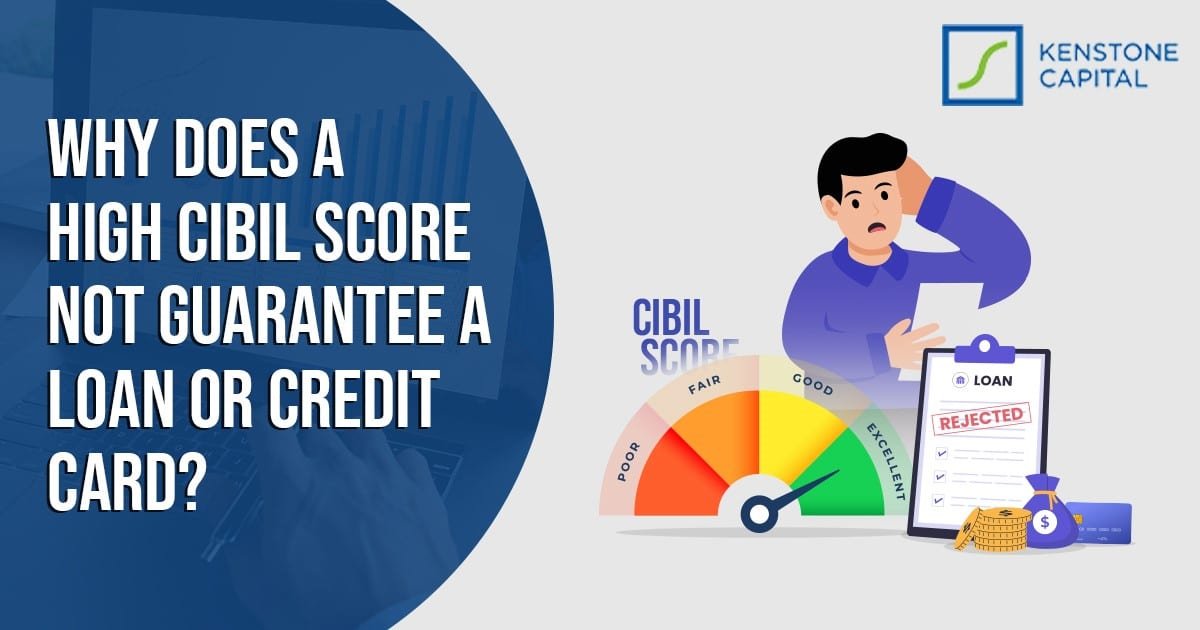
    WHY DOES A HIGH CIBIL SCORE NOT GUARANTEE A LOAN OR CREDIT CARD?

    Understanding Credit Behavior: Beyond the CIBIL Score

    One of the biggest myths about a High CIBIL Score is that it guarantees instant loan or credit card approval. However, sometimes even if you have a high credit score, it won’t guarantee approval. This is largely due to your credit behavior. Credit refusal relies not only on your CIBIL score but also on your entire credit history. Therefore, it is important to understand your credit behavior as a potential borrower.

    SIGNIFICANCE OF CREDIT BEHAVIOR

    A credit score is a complex topic because it is derived from various factors that reflect the borrower’s behavior. Credit behaviorally, pay debts and EMIs on time, and banks will mark you as a potential customer who deserves it. It is all about how you handle borrowed money. If you pay all debts and EMIs on time, banks consider you a potential customer with good credit. If you keep delaying payments, financial institutions will mark this as bad credit behavior. While many look for a credit report fixing service to address technical errors, maintaining consistent debt payments is the only way to ensure a high CIBIL score remains “good.”

    CREDIT UTILIZATION AND CREDIT BEHAVIOR

    Credit utilization implies the amount of credit you have utilized as expenses in accordance with your credit card balance or limit. It additionally considers the current credit limit that is being utilized. For instance, on the off chance that your balance is ₹300 and your credit limit is ₹1,000, at that point your credit usage for that credit card is 30%. It is prudent to keep your credit use proportion under 30%. The credit score can be drastically affected if you have the tendency of using more than 30 percent of your credit limit.

    Let us assume that your CIBIL score was 800 six months ago but because of your propensity for excessive credit use, it has dropped to 750. If your report shows high utilization despite low balances, consulting credit report repair services can help identify if your limits are being reported correctly.We are all aware that banks and financial institutions require a minimum score of 750 to offer an extended credit line. For the bank, excessive credit use is lucrative, as more money flows out faster than it flows back into the system. This is viewed as one of the parameters of bad credit behavior, and consequently, your loan application is probably going to be rejected.

    Even with a score of 750, excessive use of credit is viewed as a parameter of bad credit behavior, and your application is likely to be rejected. If your report shows high utilization despite low balances, consulting credit report repair services can help identify if your limits are being reported correctly.

    NON-PERFORMING ASSETS (NPAS)

    A Non-Performing Asset (NPA) refers to a loan or advance for which the repayment was not made after the due date of 90 days. It is actually considered to be a bad debt in terms of regularly scheduled payments. For example, if a company with a loan of approximately 10 million with interest-only payments of 50,000 per month fails to make a payment for three consecutive months, then the bank will identify that company’s loan as non-performing in accordance with its guidelines. A loan may also be known as non-performing if a company makes all interest payments but is unable to repay the principal on maturity.

    In recent researches, it came into spotlight that NPAs across India stand at ₹100 Millions. This is exceptionally perilous for the monetary strength of our nation and has consumed a piece of India’s GDP. Hence, banks are under a great deal of pressure from the RBI to control the rising NPAs. So, banks are bound to dismiss a loan or credit card application if the borrower has a bad credit behavior. Therefore, banks are concentrating more on credit behavior and credit score before approving loans or credit cards of an individuals or companies.

    WHAT IF YOUR LOAN GETS REJECTED DESPITE HIGH CIBIL SCORE?

    If your application is denied despite a good score, raise the issue with the concerned bank immediately. They will provide the exact reason, which may help you find what is wrong with your behavior. To ensure your data is accurate, you may want to check with a registered credit report agency in india to verify that no closed accounts are still showing as active or overdue.

    WHAT ARE THE WAYS TO IMPROVE YOUR CREDIT BEHAVIOR?

    Although there are many ways to enhance your credit score, likewise there are many steps to follow for the improvement of your credit behavior.

    1. ALWAYS MONITOR YOUR ACCOUNT HISTORY

    Once you’ve got your credit report, look for payment accounts due. Make sure you pay the full amount outstanding on or before the due date on each of your accounts.

    2. MAINTAIN OPTIMAL CREDIT UTILIZATION

    Keep the credit usage level at 30%. For instance, if you have a credit card or a store account with a limit of 1 000, try to keep the balance amount below 350

    3. IDENTIFY ERRORS AND RESOLVE THEM INSTANTLY

    Look for any errors and false information in your credit report and take active steps to pay all of your outstanding debts so that you can remove this information from your credit report. It’s better to contact CIBIL repair agency for resolving these types of misleading errors.

    4. FOCUS ON A CREDIT MIX

    Maintain a healthy mix of both secured and unsecured loans. That will set up a strong financial history. Ultimately, banks can recognize that you’re willing to repay the loans irrespective of loan types.

    Frequently Asked Questions (FAQs)

    1. Why was my loan rejected even though my CIBIL score is above 750?

    A high score is only one part of the approval process. Banks also look at your “Credit Behavior,” which includes your debt-to-income ratio, recent credit inquiries, and whether you have been a guarantor for a defaulted loan.

    2. Can a credit report fixing service delete legitimate negative marks?

    No. A legitimate credit report fixing service can only help you identify and dispute inaccuracies, errors, or outdated information. They cannot remove factual records of late payments or defaults.

    3. What is the role of a credit report agency in India?

    Agencies like CIBIL, Equifax, and Experian collect and maintain credit records of individuals provided by banks. They do not decide on loan approvals; they provide the data that banks use to make those decisions.

    4. How long does it take for credit report repair services to show results?

    Once a dispute is filed regarding an error, the credit bureau typically has 30 days to investigate and update the record. Total improvement in a score usually takes 3 to 6 months of consistent behavior.

    5. Does high credit card usage count as bad credit behavior?

    Yes. Even if you pay your bill in full every month, consistently using more than 30% of your limit suggests “credit hunger,” which can lower your score and signal risk to lenders.

    6. Is a “Settled” status the same as a “Closed” status on a credit report?

    No. “Closed” means the loan was paid in full. “Settled” means the lender agreed to accept less than the full amount due. A “Settled” status can negatively impact your credit behavior profile for years.

  • 7 MOST COMMON B2B DEBT COLLECTION MISTAKES

    7 MOST COMMON B2B DEBT COLLECTION MISTAKES

    While running a business, collecting the past due payments from your business customers can be one of the most daunting aspects. Here’s a simple fact: It’s easy to make a mistake when engaging in debt collection for companies that aren’t specialized in debt recovery. In fact, the debt recovery industry is so mired in regulation that the likelihood of making a mistake is quite high.

    If you are building your credit program, you may not be familiar with some common errors or mistakes that business owners make while collecting past due accounts.

    Here is the list of some common mistakes that may encounter while collecting b2b debts from your customers.

    1. UNAWARE OF THE EXPENSES THAT ARE INCURRED IN DEBT RECOVERY

    Before you focus on an initiative to recover your business client’s past due receivables, it is important to evaluate the costs that are imposed in debt recovery process and so, that you can know whether your collection efforts are going to be justified or not. During such circumstances, a collection agency will help you determine what those expenses are.

    2. HARASSING THE CUSTOMER UNINTENTIONALLY

    There are several laws that companies need to obey while seeking to get back their client’s debt. Such rules prohibit a debtor from intimidating or harassing a customer while attempting to recover a debt. Excessively persistent or forceful demands may constitute harassment which is contrary to the rules on debt collection. These conduct sanctions include punitive damages, or even litigation. Before dealing with debt collection, you need to make sure that you are aware of the debt collection laws in your area to avoid such penalties.

    3. NO CREDIT POLICY

    In general very few businesses have a credit policy which holds a potential impact while recovery of debts. A credit policy identifies low, medium or high risk clients. This segmentation will help you set guidelines on credit limits and help organize collections. If you don’t have a good credit policy, you could end up extending credit without taking precautions to everyone. That can leave you with a lot of unpaid debt from past due invoices.

    4. OUTDATED CLIENT RECORDS

    Unlike outdated client records, updated client records allow you to detect the raise of potential debt issues. It allows you to take control of a debt issue, rather than the debt that controls your business. We all know about seemingly prosperous firms that just went bankrupt because they didn’t have enough cash to keep doing business. If you allow bad debtors to dominate your corporation, you’ll probably follow the same path. The most useful resource when it comes to managing a business is an actual client record. It will help you monitor customer behaviour and curb debt problems before they are going to happen.

    5. IRREGULAR FOLLOW-UPS

    A clear follow-up strategy helps you get paid more quickly and avoid bad debts. Additionally, prompt collection of past due accounts will help you maintain a healthy cash flow. A good follow-up system includes getting in touch with debtors on time, setting credit limits, credit checks and implementing a good credit policy. Hence, following through on any past due balances is essential to increase your chances of debt recovery promptly and consistently.

    FAILING TO COMMUNICATE ON A DAILY BASIS

    Lack of timely and regular communication with debtors will leave you with huge sums of unpaid debts. It’s important to always note that communication is a key to the relationship between debtor and creditor. Companies that use only one or two methods like sending emails and letters to reach a past due clients aren’t going to be reliably imaginative enough to get the job done. A telephone call is surely one of the best channels of communication, and it becomes even more difficult to ignore someone when they speak directly to you.

    WAITING TOO LONG TO HIRE A COMMERCIAL B2B DEBT COLLECTION AGENCY

    Most businesses are too patient when it comes to debt collection, and wait too long before contacting a commercial debt collection agency. The main reason behind this phenomenon is the fact that their account receivables do not set the payment deadlines. It is prudent to be rather impatient when it comes to debt collection. Waiting longer to employ a debt collection agency to recover your past debts is one of the most common mistakes that companies make when they try to collect past debts.

    It can be challenging to receive payments on time. When trying to recover your past due debts, one of the best things to do for your company is to hire a commercial b2b collection agency as soon as your client is already 90 days late in paying your invoice. At Kenstone Capital, We help you cultivate and retain positive working relationships with your customers by providing our clients with non-contentious solutions through our amicable debt collection services. We specialize in helping businesses to collect their past due receivables. Call or email us for a free consultation and get a free price quote!

  • HOW TO BOUNCE BACK FROM A LOW CIBIL SCORE?

    HOW TO BOUNCE BACK FROM A LOW CIBIL SCORE?

    It is no more difficult to bounce back from bad credit if you are keen to follow the right steps to set up yourself for financial success by paying off left debt. Although there are many reasons for a Low CIBIL score, likewise there are many ways to rebuild your credit score but which may take time and requires focus on the basics. Enjoy yourself with the lord of ocean.

    HERE ARE THE FEW STEPS TO FOLLOW TO RECOVER FROM LOW CIBIL SCORE:

    1. CHECK YOUR CIBIL SCORE AND REVIEW IT REGULARLY

    Before we get into the tricks and tips, it’s important to check your CIBIL report regularly as it helps you to fix the credit score whenever you notice any inaccuracies in the form of defaults or delays in payments. So, that you can always contact the bank and can set right your CIBIL. This will ultimately helps you in increasing the credit exposure.

    2. MAKE THE PAYMENTS ALWAYS ON TIME

    Being late for credit card and loan payments is always the primary reason for a bad credit score, as it is 35% worth of your total. Make it as a top priority to pay off all unpaid debts as soon as you can overcome your personal crisis. If you have various credit cards and personal loan accounts, merge all these loans and take out a single loan to make them pay off.

    3. LESSEN YOUR PRESENT EMIS TO 30 PERCENT OF YOUR MONTHLY INCOME

    Your EMI to income ratio should not exceed 30 per cent of your net salary. Any amount that goes beyond this reduces your financial capacity to repay your loans responsibly. So, it’s better to maintain this ration on your EMIs and construct your credit score effectively.

    4. KEEP THE BORROWING TO A MINIMUM

    If you’re applying for too many loans or you’re too close to your credit card’s limit then your CIBIL score is likely to drop as such practices indicate a credit-hungry behavior. The best thing to do is not to take out a loan until it is absolutely necessary and always make sure that you are not close to your credit limits. This appropriately helps to recover from bad credit.

    5. ENHANCE YOUR CREDIT SCORE BY MIXING IT UP

    Never settle down for unsecured loans, i.e. credit cards and personal loans. Go with mixed credit bag as it includes both unsecured loans like personal loans and secured loans likes car or home loans which helps to build a better profile, because banks can recognise that you’re willing to repay the loans irrespective of loan types.

    6. DON’T KEEP APPLYING FOR CREDIT IF IT IS REJECTED

    Whether you have applied for a loan or credit card, and your request has been denied, the whole information will be recorded in your credit report. When you subsequently apply for loan in some other bank, they will see your low score and the previous rejection, and may refuse your application. In such cases the best thing to do is not submit again and wait until the score improves.

    Even though it’s fact that a poor credit score can adverse your future credit requirements, the situation isn’t beyond repair. The only thing you need to keep in mind is that it takes at least a couple of months for the scores to grow, so you need to wait a bit for your scores to show some change.

    Remember, a good CIBIL score will help you gain access to credit and loans whenever you need it. To get things right, all you need is patience and diligent effort. Let’s start rebuilding your score and work towards your financial goals and dreams.

    Are you looking to improve your LOW CIBIL Score? Contact us

  • KEY CHALLENGES OF B2B DEBT COLLECTION

    KEY CHALLENGES OF B2B DEBT COLLECTION

    Many companies work hard to maximise debt collection performance by closely working with their collection teams and Debt Collection Agencies (DCAs). However, many business owners encounter many challenges on a daily basis due to lack of proper planning while collecting the debts from their customers.

    LET’S HAVE A LOOK AT THE CHALLENGES OF B2B DEBT COLLECTION AND THE STEPS TO OVERCOME THOSE!

    HELPING CLIENTS WHEN THEY RECEIVE DEBTS FROM OTHER BUSINESSES

    To become successful, every company must strategically balance its costs with its revenue. When you look at your summary of cash flows, you may find that some losses are not due to routine operating expenses, but rather due to the money owed by other businesses.  Unfortunately, sometimes these losses may exist for a long time.

    It is no more surprising that most of the companies rely on one another and work together to achieve better results. While working together, other business owners should understand the importance of prompt invoice payment, as delay of payment will throw off the budget and operations. While you place more emphasis on handling your employees, monitoring operations, and aligning your books, the very last thing you have to worry about is undertaking collections from obstinate firms that are reluctant to pay. Keep an eye on your finances by allowing us to manage your debt collections from business to business.

    A DISTINCTIVE STRATEGY TO COLLECT B2B DEBTS

    Whether you are a vendor, supplier or offering other business benefits, your customers need to pay their invoices in a timely manner so that you can keep track of your profits. Many key differences distinguish consumer collections and B2B collections which may often won’t work properly. Hence, our law firm has come up with innovative approaches on behalf of our clients for recovering company debts.

    It is always noticeable that certain companies ‘ debts tend to be higher than the individual customers ‘ debts. Therefore business-to-business debts will have a greater impact on your profit margin and could even negatively impact the profitability of your company in the case of premium clients. In this scenario, when filing for bankruptcy and wrapping up operations, a debtor can try to postpone any payments. At that time you’ll never see a dime even after the company closes. This situation is more common than you think, as many owners choose to shut down their business rather than continuing to increase their debt.

    Since B2B debt collections are specific, never employ a consumer collection agency to recover debts from business customers. Call us for the assistance and successfully handle B2B debt collection.

    AN ON-GOING GUIDANCE TO MAINTAIN YOUR B2B RELATIONSHIPS

    Once companies try to recover debts from customers, they are reluctant to maintain a relationship with that customer. Consequently, consumer collection departments and agencies often use blunt or even threatening methods to receive payment. If you want to treat your business customers differently, particularly those who can place large orders once their budgets are back on track, then approach us as we treat b2b collections with a view to maintaining relationships. Secondly, when dealing with your business clients, we never use threatening or unprofessional methods. We keep it professional so that we don’t impact the company’s image at all— because we reflect you.

    Most B2B collections start with a letter of demand, where all it takes is a letter from an accomplished tax attorney to reassure an owner that you are adamant about debt recovery. Upon receiving the letter, the company may want to prevent further legal action and may reach out on the debt.

    In some circumstances, a business may suffer a temporary setback or lack of liquidity that prevents it from paying debt right away. At that time, we may reach an agreement that the company will be able to make lower payments or implement an instalment plan instead of paying off the debt in total simultaneously.

    Contact us for Assistance Today

    If you are an owner of a business and are owed to payments from another business, especially if that debtor company knows how to avoid payment, the path to recovering the debt can be extremely challenging. In such cases, you should focus on running your company, not constantly struggling for payments with other businesses and allow us to seek payment on your behalf of B2B debts. Call or email us online to discuss how we can support you today.

  • WHAT IS THE SARFAESI ACT?

    WHAT IS THE SARFAESI ACT?

    The supreme court, in their latest judgment, has extended the SARFAESI act to cooperative banks. SARFAESI Act or Security securitization and reconstruction of financial assets and enforcement of security interest act, 2002, were earlier applicable to commercial banks only. This change adds some new advantages to the cooperative banks.

    In this article, we will talk about what exactly is the act and how it helps the banks.

    WHAT IS THE SARFAESI ACT?

    This act was passed in December 2002 to help loan lenders to retrieve their money from borrowers who are unable to pay their dues. This act helps Financial Institutions in loan Money retrieval by permitting them to quickly sell resources of the person who failed to pay the loan amount.

    Before 2002, banks had to take a long path involving the judiciary to recover their loan amount. This entire process was highly time consuming for the bank and elongated the next loan sanctioning period.

    The inception of the SARFAESI Act in 2002, the financial institution was grant power to sell the attached assets of the borrower upon unsuccessful repayment.

    The bank would take over the ownership of the assets. It keeps the banks out of judicial involvement and therefore saves them a lot of time.

    However, this act had disadvantages for unsecured lenders. Some of these were taken care of in the insolvency and bankruptcy code, 2016.

    WHY IS THIS LAW NECESSARY?

    In the 2002 version of the law, there was no provision for cooperative banks. In 2003, the central government released a new statement, which talked about integrating cooperative banks under the rest of the banks in the SARFAESI act.

    However, the actual amendment enacted in 2013 only, the cooperative banks were formally inducting in the financial institutions’ league under the SARFAESI act.

    Many people raised questions about the changes made in the act. On 5th May 2020, the final decision to induct cooperative banks was validated by the supreme court.

    It helps the cooperative banks quickly recover their loans, helping them save time and making the loan sanctioning and recovery process shorter for both the bank and customers.

    If we look at the Indian banking system’s statistics, 2020 has around 1500 urban cooperative banks and about 95000 rural cooperative banks.

    If we look at the statistics, various cooperative banks have around 1500+ and 95000+ branches in the urban and rural provinces, respectively.

    Looking at these statistics regarding the size of cooperative banks in the Indian banking system, we can easily understand this act’s importance.