Blog

  • The 12 Benefits Of Good Credit And How It Can Help You In Your Financial Life

    The 12 Benefits Of Good Credit And How It Can Help You In Your Financial Life

    Credit scores indicate your financial health, creditworthiness, and overall financial health. The importance of building good credit early on cannot be overstated since it is a crucial part of your financial identity. Having a bad credit score can increase the cost of your largest financial purchases while having a good score gives you a competitive edge when applying for loans.

    Many of us define financial freedom as the ability to afford the lifestyle we desire through savings, investments, and cash on hand.

    Different people have different ideas about what “financial freedom” entails. The freedom to buy whatever you want and when you want is one of the definitions of financial freedom. People might feel more relaxed about their finances if they don’t have to worry about their bills or sudden expenses. Some people define it as becoming debt-free, while others may define it as becoming wealthy enough to retire. In spite of the fact that all of these interpretations are somewhat true, they all provide only half-baked solutions. We’ll examine the ‘cash on hand’ portion of that statement and discuss how credit (via loans and credit cards) can be a more efficient way to build financial freedom.

    A borrower’s creditworthiness is determined by his or her ability to repay a loan or credit. There are several ways in which having good creditworthiness can help you become financially independent:

    1. Access to better credit terms: Lenders are more likely to offer you better credit terms if you have good creditworthiness, such as lower interest rates, longer repayment periods, and higher credit limits. In addition to saving you money in interest charges, this will allow you to manage your debt more efficiently.
    2. Ability to secure loans and credit: If you have good credit, you can obtain loans and credit more easily, whether you need a mortgage, a car loan, or a credit card. Your financial goals will be more likely to be achieved if you take this approach, such as buying a home or starting a business.
    3. Improved job prospects: A number of employers check credit scores as part of the hiring process. Having a good credit score may signal to potential employers that you’re reliable and responsible, which could boost your job prospects and potentially lead to higher salaries. Personal credit checks are required for some jobs, such as those in the finance sector or those requiring security clearance. The purpose is to make sure you’re capable of handling finances or that financial difficulties will not make you vulnerable to bribery. There are some jobs that you might not be able to apply for if you have a poor credit score.
    4. A better sense of financial security: Maintaining good creditworthiness demonstrates your ability to manage credit responsibly and reduces your chances of getting into financial trouble. In addition to improving your ability to handle unexpected expenses, this can also make you more prepared to handle emergencies.
    5. Having good credit will lower your interest rates: Lower interest rates are one of the main benefits of having good credit. The interest rate you will pay when applying for a loan, such as a mortgage or credit card, is usually determined by your credit score. Learn how to improve your credit score in a faster way here. Credit scores with higher scores typically attract the lowest rates; less credit-worthy applicants often find their interest rates higher. It is the lender’s responsibility to determine and set the interest rate for each individual. Based on the information provided, the rates are believed to be accurate.
    6. The average interest rate on a personal loan depends on your credit score: Increasing your chances of qualifying for a loan or credit. If you have ever been denied a credit card or loan, you understand how painful it can be. Denial of financing for an important purchase, such as a mortgage or a car, can be a hardship. Getting denied other loans, such as private student loans that can help many people afford college, can be devastating. In addition to better credit scores, applicants are more likely to be approved. Obviously, lenders consider your credit score in addition to other factors, but it is important.
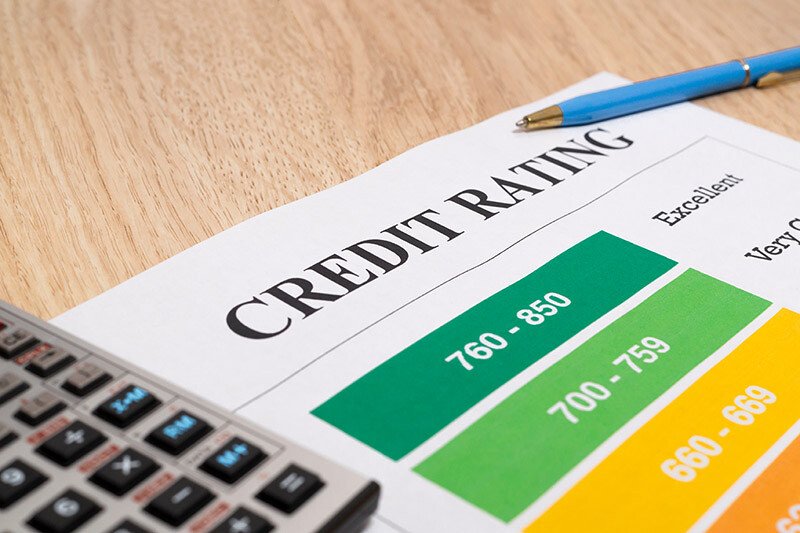
    7. Larger Credit Card and Loan Limits: You’ll be able to take out a mortgage in some high-cost areas if you have a good credit score, such as a jumbo loan. Additionally, you may be eligible for higher credit card limits. An Experian study found that the average Baby Boomer had a credit score of 731 and a credit limit of nearly 32,820,60 INR. In contrast, young Millennials had a lower credit score of 668 and a smaller credit limit of around 16,410,30 INR. As credit scores are influenced by the length of your credit history, Baby Boomers have had more time to build good credit than earlier generations.
    8. Rewards from credit cards that are better: The better your credit score, the more credit cards you’ll be able to apply for, including cards with higher limits. It is important to have excellent credit in order to be approved for most rewards cards. In addition, to travel rewards cards, you can also earn cash-back rewards cards that earn a percentage back on your spending.
    9. Easier Approval for Rental Properties: No matter whether you plan to buy a house in the near future, it is still important to have a good credit score. In most cases, landlords consider your credit score when deciding whether to rent to you, which is something most people are unaware of. The landlord is more likely to approve you as a tenant if you have a good credit score since an on-time payment history is more appealing to them than someone with multiple delinquencies. If you do not meet these requirements, you may need to pay a larger deposit, agree to a short-term lease, or even have your application denied altogether.
    10. Lower Insurance Rates: Insurance costs can also be reduced if you have good credit. Insurance companies use your credit score to determine whether to accept you as a customer and how much to charge you, despite some officials’ concerns. Those with fair credit (a FICO score between 580 and 669) pay 39% more for auto insurance, according to a study by insuranceQuotes. The situation was even worse for people with poor credit (A FICO score under 580), who paid 103% more.
    11. Avoid Security Deposits on Utilities: When it comes to getting your utilities turned on, a good credit score is important, too. A good credit score will likely lead to your utilities being turned on with a minimum amount of hassle. You may also need a deposit from you if your credit is poor, or even someone to legally agree to pay your bill in case of non-payment, similar to finding a co-signer for a loan.
    12. Negotiating Power on Loan Terms: Better credit scores can lower interest rates, as well as be used as a bargaining chip during mortgage negotiations. Prequalification and comparison of rates with a few lenders will help you achieve this. If your rate estimate is accurate, you can take it around to different lenders to see if they can give you better terms, such as lowering the interest rate even further or waiving loan fees.

    Bottom Line

    The importance of maintaining and building a strong credit profile cannot be overstated, since the credit score is an important component of most lending decisions. In order to prepare for any future loan or rental applications, make sure to improve your credit score if you have a low score. Having good creditworthiness is important for attaining financial independence, as it gives you access to better credit terms, allows you to secure loans and credit, improves your job prospects, and makes life more comfortable.

  • How Credit Advisory Services Can Benefit You

    How Credit Advisory Services Can Benefit You

    What is Credit Advisory Service?

    Credit Advisory Services offer guidance and advice on credit management, debt consolidation, and financial planning. They can assist individuals with understanding their credit reports, improving their credit scores, and developing debt management strategies. You will then be given suggestions on how to improve your credit score based on an analysis of your credit report by a credit expert. For those with low or no credit scores, as well as those who have never used credit before, this service can help them get credit facilities, including loans and credit cards.

    Why Do You Need Credit Advisory?

    Taking advantage of a credit advisory service can help you better understand your credit report. This service is useful not only for those who lack a credit history, but also for those who need to start over from scratch in order to establish a positive credit score. By understanding the factors affecting credit scores, customers can improve their credit scores significantly over time with credit advisory services.

    The causes of your poor credit score will be determined by advisory professionals, who will also create a plan of action to raise it. As a result, they advise consumers to focus on credit score-improving practices like maintaining healthy credit behavior, maintaining a good credit utilization ratio, and paying their bills on time, etc. to improve their credit scores.

    In addition to this, a credit advisor can also assist you in finding and correcting errors in your report to help you improve your credit score. The importance of monitoring your credit health cannot be overstated, and a credit advisory service can help you achieve this goal.

    It is possible for individuals, businesses, and organizations to benefit from credit advisory services in a variety of ways. Here are some of the key benefits:

    1. A better credit score: 

    It is possible for credit advisory services to provide clients with advice on how to improve their credit scores by understanding the factors that impact them. As a result, you may be able to get better interest rates and access to credit in the future. An advisor can identify errors, inaccuracies, or negative items on a client’s credit report that may affect their credit score. They can assist clients with debt management, including creating a repayment plan, negotiating with creditors, or consolidating debts. As part of a credit advisory service, clients can get alerts and monitoring tools to make sure that their credit scores and reports stay up-to-date.

    1. Better financial management: 

    Advisors can help clients develop budgets that are aligned with their financial goals by helping them understand their spending patterns. A credit advisor can create and help clients adhere to a budget that is aligned with their financial goals, which can help clients manage their debts more effectively, such as by negotiating with creditors or consolidating their debts. 

    As part of their financial management services, they educate clients about topics like building good credit, managing their cash flow, saving money, and investing their money to assist them in establishing a savings plan that aligns with their financial goals, including saving for a home down payment and building an emergency fund. By doing this, clients will be able to manage their money more effectively and avoid debt. Furthermore, they provide clients with retirement planning assistance, including determining which investment vehicles are best suited to their needs.

    1. Debt consolidation: 

    Clients can benefit from credit advisory services by consolidating their debts into a single payment, making it easier to manage their finances and possibly lowering their interest rates. Expert guides and advisors provide guidance and advice on the various debt consolidation options available to borrowers. 

    To simplify the repayment process and potentially reduce the overall cost of debt, debt consolidation involves combining multiple debts into a single loan, typically at a lower interest rate. By Assessing Your Financial Situation, Identifying Debt Consolidation Options, Negotiating with Creditors, Applying for a Debt Consolidation Loan, and Creating a Debt Repayment Plan, they provide important support and guidance throughout the debt consolidation process. 

    1. Credit education: 

    Education on credit-related topics such as credit reports, credit scores, and credit monitoring can be provided by credit advisors. Clients can make more informed financial decisions as a result. Credit counselors provide individuals with information about how credit works and how to manage their credit effectively. 

    The benefits of credit education are especially beneficial to individuals who are in debt or have poor credit scores. In order to achieve long-term financial stability, individuals can develop good financial habits and build credit knowledge through Credit Advisory Services. When individuals learn about credit management, they are able to avoid debt problems and make informed financial decisions.

    1. Personalized advice:

      Credit advisory services can provide personalized advice based on the financial circumstances and goals of their clients. Developing a plan tailored to a client’s needs can help them achieve their goals. We offer this service to people with low credit scores who wish to build their scores or are having trouble getting credit facilities because of low credit scores, such as loans and credit cards.

    Credit advisory services can have a positive impact on the financial health of individuals and businesses, allowing them to achieve their financial goals and improve their financial health. In addition to helping you measure and manage credit risk, a credit advisory team can help you improve the performance of your institution’s financial instruments. The credit advisory services will provide you with best-in-class counseling that’s tailored to the needs of your institution whether you’re seeking regulatory compliance or competitive advantage. 

    FAQs

    1. Credit Advisory Services: Why do I need them?

    Ans: If you’re struggling with debt or have a bad credit score, you might benefit from Credit Advisory Services. A credit advisory service can help you achieve long-term financial stability by providing personalized advice on debt consolidation options, credit management strategies, and financial planning.

    2. What is the cost of credit advisory services?

    Ans: There are different types of Credit Advisory Services with different costs depending on who you choose to work with and what services you require. The fees charged by some Credit Advisory Services may be flat, while others may be based on a percentage of the debt that is being consolidated. Before choosing a Credit Advisory Service, it is important to research different providers and compare costs.

    3. When can I expect to see results from Credit Advisory Services?

    Ans: It can take between two and eight months to see results from Credit Advisory Services, depending on your financial situation and goals. The process of paying off debts and improving your credit score may take several months or even years. Credit Advisory Services can help you develop a plan to achieve your financial goals and achieve financial stability with guidance and support.

    4. How can I find a reputable Credit Advisory Service provider?

    Ans: Researching different Credit Advisory Services providers online and reading reviews available from other clients can help you find a reputable provider. Also, you can ask friends or family members who have used Credit Advisory Services for recommendations. Moreover, make sure that the provider is certified by a professional association or regulatory body.

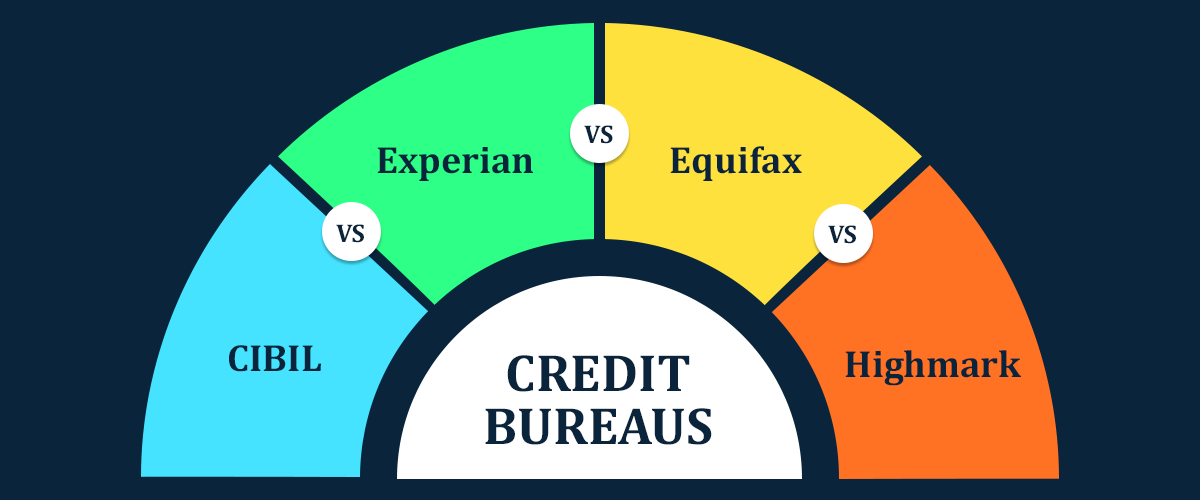
  • How do CIBIL, Experian, Equifax and CRIF High Mark differ from each other?

    How do CIBIL, Experian, Equifax and CRIF High Mark differ from each other?

    There are four major credit bureaus operating in India: CIBIL, Experian, Equifax, and CRIF High Mark. In India, CICs, or credit bureaus, are specialized financial institutions licensed by the Reserve Bank of India to collect and maintain credit information about individuals and businesses. In response to this data collection, these firms generate credit scores and credit reports for individual borrowers across a variety of lending institutions. There are four credit bureaus or credit information companies in India:

    1. TransUnion CIBIL
    2. Equifax
    3. Experian
    4. CRIF High Mark

    The following is a brief comparison between them:

    1. CIBIL (Credit Information Bureau India Limited):

    The oldest and most popular credit bureau in India is CIBIL, which provides credit reports to individuals and businesses. The TransUnion CIBIL credit bureau was established in 2000 and is one of the most popular in India. A large number of banks, financial institutions, housing finance companies, and nonbank financial companies in India are members of CIBIL. There are more than 1000 million individuals and businesses that rely on it to collect and maintain credit information. The Consumer Bureau, Commercial Bureau, and Micro Finance Institution Bureau generate CIBIL Credit Information Reports, while the Commercial Bureau generates CIBIL Commercial Reports. TransUnion’s subsidiary CIBIL is a division of the company. The cost of a credit report with a credit score is Rs. 550. There is only one charge (including taxes/handling charges) for the Credit Report.

    2. Experian Credit Information Company:

    Experian, a global credit bureau, entered the Indian market in 2010, becoming the first credit bureau to receive a license under the new Credit Information Companies (Regulation) Act (CICRA) 2005. More than 350 million individuals and 27 million businesses have their credit information collected and maintained by it in India. In general, a higher score signifies a better credit profile. Experian scores range from 300 to 900. 

    Experian India offers both individuals and companies access to Experian credit reports and scores. To help individuals and businesses make informed credit decisions, it provides information, marketing services, and analytical tools. It costs Rs. 399 (including taxes) for a Credit Report and Credit Score. The cost of the Credit Report alone is Rs. 138.

    3. Equifax Credit Information Services:

    As a global credit bureau with its headquarters in Mumbai, Equifax India is a joint venture between Equifax Inc., USA, and seven leading financial institutions in India. Using Credit Information Reports and Credit Scores, it presents credit information pertaining to individuals and commercial entities in a more useful and readable format. In addition, Equifax has a separate bureau for Microfinance Institutions, whose needs are increased as a result of increased lending and regulatory requirements. There are over 600 million individuals and 26 million businesses in India who are provided with credit information through this company. Generally, Equifax’s score ranges from 1 to 999, with a higher score indicating better credit. A credit report with a credit score costs Rs. 472 and a credit report without a credit score costs Rs. 118.

    4. CRIF High Mark Credit Information Services:

    With headquarters in Mumbai, CRIF High Mark claims to be India’s first full-service credit bureau, providing comprehensive credit information to all segments of the Indian economy, including retail consumers, small and medium businesses, commercial borrowers, and microfinance borrowers. Additionally, this credit bureau provides analytics, insights, data management, and related software solutions to banks, MFIs, NBFCs, housing finance companies, insurance companies, and telecom service providers. There is a charge of Rs. 399 for one Credit Report with a credit score.

    The credit information provided by the four credit bureaus is similar, but the credit score ranges and other factors may differ slightly. Ensure that your credit report and score are accurate and up-to-date by checking them periodically from all the major credit bureaus.

    CIBIL, Experian, Equifax, and CRIF High Mark are compared in the following table:

    CoverageCredit Score RangeCredit Report FormatCredit Report Update FrequencyProducts and ServicesCustomer Service
    CIBIL600 million individuals300-900Similar to othersOnce a monthCIBIL Rank, Score, Dispute Resolution For Members: Customer Acquisition, Portfolio Management, Analytics, and Consulting, etc.Good
    Experian350 million individuals300-900Similar to othersReal-timeFraud Detection, Customer Management Systems, 
    For members: Fraud and Risk Management, etc.
    Average
    Equifax600 million individuals1-999Similar to othersReal-timeCredit Alert, Score
    Credit Report Dispute Resolution
    For Members:

    Equifax Risk Score, Equifax Portfolio Review, Equifax Alerts, etc.
    Average
    CRIF High Mark400 million individuals300-900Similar to othersReal-timeCredit Score, ReportDispute Resolution For Members:Identification and Anti-Fraud services, Predictive Analytics & Scorecards Additional Solutions:Business Rules and Decision Management, External Data Connector, De-Duplication Services
    Good

    Please note that the information in the table is subject to change, and this is only a general overview. Specific details will vary by credit bureau and will depend on the particular products and services they offer.

    FAQs

    Q: How do credit bureaus determine credit scores?

    A: A credit score ranges from 300 to 900 with CIBIL, Experian, and CRIF High Mark, while a credit score ranges from 1 to 999 with Equifax.

    Q: How often are credit reports updated by each credit bureau?

    A: Credit reports are updated once a month by CIBIL, while they are updated in real-time by Experian, Equifax, and CRIF High Mark.

    Q: Does each credit bureau offer the same products and services?

    A: The products and services offered by each credit bureau vary. The CIBIL Rank, for example, is a numerical representation of a company’s creditworthiness based on its credit history. In addition to monitoring credit applications, Experian offers a Fraud Detection Service that alerts individuals and businesses when suspicious activity is detected. Equifax offers a Credit Alert service, which notifies customers when their credit report changes significantly. Credit Scores and Credit Reports are available from CRIF High Mark.

    Q: Which credit bureau offers the best customer service?

    A: There may be differences in customer service levels between credit bureaus, with some providing better service than others. The customer service provided by each credit bureau may differ depending on individual experiences.

  • Decoding your Credit Score! Can It Be A Benefit Or A Bane?

    Decoding your Credit Score! Can It Be A Benefit Or A Bane?

    Almost all cardholders find debt a nightmare, one that affects their credit score as well. Resist the temptation to use your entire credit card limit, no matter how tempting it may seem.

    The way you manage your credit card debt can have both positive and negative effects on your credit score.

    Credit card debt can show that you are actively using credit and making timely payments, which can improve your credit score. Your credit utilization ratio, which is the amount of credit you use compared to your credit limit, will be negatively affected if you carry high balances or max out your credit cards. It is possible to lower your credit score if you have a high credit utilization rate.

    Furthermore, carrying credit card debt for an extended period may indicate that you are living beyond your means or struggling financially, which may negatively affect your credit rating.

    Keeping your credit utilization ratio below 30%, paying your bills on time, and avoiding long-term credit card debt will help you maintain a healthy credit score. For those struggling with credit card debt, it is crucial to seek professional assistance to develop a plan to pay it off and improve their financial health.

    What effect does pay off debt have on your credit score?

    Getting rid of your credit card debt will improve your credit score. Yes, you read it correctly. Paying off your debt decreases your credit utilization rate (CUR). How would you rate your credit utilization? Debt-to-credit ratios measure how much credit you are using compared to how much is available.

    Fortunately, you can raise your credit score by reducing your utilization rate. Maintain a utilization rate below 30% or even try for a single-digit utilization rate. 

    What is the maximum amount of credit card debt that can adversely affect your credit score?

    There is no fixed number for this. Your ultimate goal should be to keep your credit utilization rate below 30%. 

    Due to the fact that this is a total or “aggregate utilization” that’s measured by your credit score, getting a new card to spread your debt across all your cards could prove to be unwise. It can affect your credit score negatively, as a new card requires lenders to verify your past repayment history, which can be viewed as a credit check, which, in a way, can influence your credit score. The increase in your credit card limit, however, may not affect it. 

    What is the impact of paying off credit card debt on your credit score?

    While you might feel relaxed after paying off your credit card debt, it may not necessarily work in your favor. However, sometimes it can actually have quite the opposite effect, causing your credit score to dip temporarily. 

    You may see a drop in your credit score if you pay off an installment account before the due date, causing the account to be prematurely closed. Due to the fact that they can no longer earn interest, most lenders are not in favor of this. After all, interest is one of the major ways lenders earn money. Additionally, it reduces the number of accounts you have open, which is again looked down upon by lenders. If you pay off an installment early, your score might go down a bit. 

    Despite paying off your installment loan on time, your credit score can still drop. Exactly how? There is a possibility that it was just a coincidence and that something else might have caused the same. A number of factors can have an impact on your score, such as the application for a new loan or credit card. 

    You need not worry about a drop in your credit score because it will only last for a short period of time. When does the credit score recover?

    When your credit score recovers from a dip, there is no magic time frame, but it usually takes only a few months. In the meantime, you can:

    • Stay on top of your bill payments
    • Get a better understanding of what lenders are looking for
    • Make your credit card debt a priority
    • Avoid early repayment penalties

    Is settling credit card debt going to affect one’s CIBIL score?

    Perhaps you figured out in your mind when you took out a loan that you would pay it back after a certain period. Unfortunately, some unavoidable circumstances prevent you from meeting your repayment commitment at the end of the month. In response, you can contact your bank or lender and they offer you the option of a One Time Settlement. 

    This may seem like a sign of relief to you, so you take it up right away. You realize that your CIBIL score has dropped. 

    Banks will report written-off loans to CIBIL when they are writing them off. CIBIL never fails to surprise you, even if you think the bank or lender has ended its relationship with the borrower. They refer to the deal as settled rather than concluding it. Terming a loan settled is considered negative credit behavior, and the borrower’s credit score is likely to suffer. 

    This record has been held by the CIBIL for over 7 years. During that certain period, the borrower may not be able to obtain a loan from a bank if he approaches the lender for one in the future. Borrowers’ past repayment history is taken into account by lenders before giving them a loan. Banks and lenders will not approve a loan application if the borrower has a settlement on their credit report. 

    Takeaway

    Therefore, paying off your credit card debt alone won’t affect your credit score. The score is actually lowered by a combination of other factors. 

    Furthermore, you must keep in mind that paying off credit cards early does not harm accounts; however, paying off installment accounts does. 

    FAQs

    What is the importance of paying off credit card debt?

    Ans: You will probably have a higher credit score if you regularly use your credit card to make purchases but pay off the balance in full every month, as opposed to carrying a balance month-to-month. Another important factor affecting your credit score is your credit utilization ratio.

    Is it true that paying off credit cards improves credit?

    Ans: In spite of consistently paying off your credit card every month, if you have a high balance on the day the credit report is made, it may affect your score, even if you repay it the following day.

    Is there a problem with credit card debt?

    Ans: If your total balance exceeds 30% of your total credit limit, you may have too much debt. Experts usually recommend keeping credit utilization between 11% and 30%, while anything between 1% and 10% is considered good.

  • In terms of financial abilities, how do men and women differ?

    In terms of financial abilities, how do men and women differ?

    Most of us picture a man as a businessman, entrepreneur, or self-employed individual.  However, the reality is more balanced.  Women own and operate approximately 20% of Indian MSMEs. Over the past decade and a half, millions of thriving women-owned businesses have been created as a result of bank accounts and credit extensions geared toward women. Through credit or loans, businesses can grow, create more economic value, and jobs, as well as generate returns for the lender. What are the differences between how men and women access and repay loans in this context? Yes, it is.

    In microfinance, small loans (that grow in size over time) are extended to women on the basis of social underwriting, one of the biggest success stories in credit extension to women.  The RBI regulates microfinance loans to women in India, as it does with other types of loans. Those borrowers who are women who are enrolled in the formal credit system. In this sector, default rates have been remarkably low and growth has been strong over the past decade.
    In spite of individual differences, men and women behave differently when it comes to money and finances. The following are some general trends:

    1. Earning:

    Most countries around the world have a significant gender pay gap, with women earning less on average than men. This is influenced by a variety of circumstances, including:

    • Occupational segregation: Most women work in low-paying jobs and industries, whereas men are more likely to work in high-paying fields.
    • Discrimination: Women may face discrimination in hiring, promotion, and pay, resulting in lower wages than men.
    • Unpaid caregiving responsibilities: Women are more likely to take on unpaid caregiving responsibilities, which can make it difficult to work full-time or pursue higher-paying jobs.
    • Negotiation skills: It has been found that women are less likely than men to negotiate their salaries, resulting in lower starting salaries and slower wage growth.
    • Education and experience:
      Women may have less access to education and training than men, limiting their earning potential.

    2. Spending:

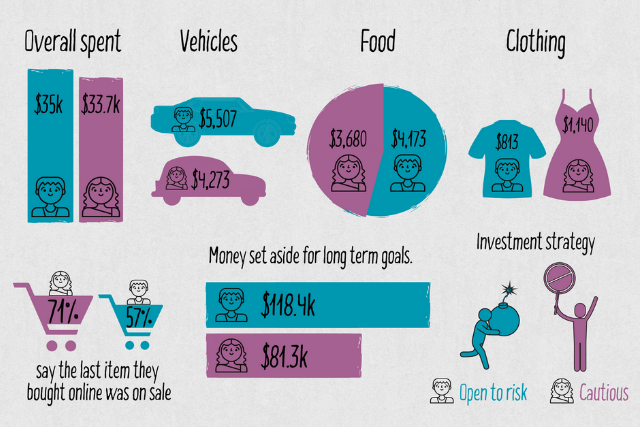
    The female population tends to be more budget-conscious than the male population, preferring to save and spend carefully over making impulse purchases. The tendency of men to spend on luxury items or large purchases is the opposite of that of women.

    3. Investing: 

    Generally, women are more cautious in their investment strategies than men are in terms of taking financial risks and investing in high-risk, high-reward opportunities such as stocks.

    4. Debt:

    According to the CDC, men carry more debt than women, due primarily to increased levels of student loans and credit card debt. Women are more likely to fear the impact of debt on their credit scores and future financial opportunities, while men may be more fearful of the financial burden brought by debt.

    5. Financial fears

    Men and women can experience financial fears, but there may be some differences in the specific fears they experience:

    • Job loss: Both men and women may fear losing their jobs, but men may feel more pressure to be the primary breadwinner and experience greater anxiety.
    • Retirement: Because of gender pay gaps, lower lifetime earnings, and caregiving responsibilities, women may worry that they won’t have enough money for retirement.
    • Emergency expenses: Men and women may worry about unexpected emergency expenses, but women may worry more about paying medical expenses due to their higher healthcare costs and greater likelihood of taking care of children and aging parents.
    • Investing: Women may be more hesitant to invest and take financial risks, which can negatively impact their long-term financial plans.

    6. Financial planning:

    Women tend to seek financial advice and engage in long-term financial planning, while men may rely more on their own intuition.

    7. Negotiation:

    Research shows that men are more likely to negotiate salary and other financial arrangements, while women are more likely to accept the initial offer.

    8. Confidence:

    Men may be more confident in their financial decisions even when they are not well-informed, while women may be more hesitant to take risks and make decisions without feeling fully informed.

    9. Women are more conservative about spending: 

    Business spending by women may be more conservative than by men. Women business owners tend to have lower levels of debt and lower average expenses than their male counterparts, according to studies. When it comes to running a business, women may also prioritize cost-effectiveness and practicality over extravagant spending.

    10. Women are better at self-monitoring their money:

    It may be more likely for women to seek financial advice and engage in long-term financial planning, which could contribute to a greater sense of control and self-monitoring. Additionally, societal expectations and cultural norms may emphasize women’s responsibility for managing household finances, which could affect women’s self-monitoring of money.

    11. Women have lesser default rates than men:

    According to studies, women default on loans at a lower rate than men. A number of factors could contribute to this, including:

    • Taking on fewer loans or loans with lower risk profiles may be more common among women than among men.
    • There is a lower likelihood of women defaulting on their loans due to their lower debt-to-income ratios.
    • Financial advice and guidance may be sought by women more often before taking on a loan, resulting in more informed and responsible borrowing decisions.
    • As a result, women may have more stable employment and income compared to men, which reduces their risk of defaulting on their loans.

    12. Compared to men, women get slightly better returns on their investments:

    The following factors may contribute to this trend:

    • Risk aversion: Women tend to prefer more conservative investments that offer lower potential returns but also lower risks when it comes to investing.
    • Patience: Women often hold onto their investments for a longer period of time and avoid impulsive buying and selling that can negatively affect returns.
    • Diversification: Women may be more likely to diversify their investments across a variety of asset classes and sectors, which can help to minimize risk and optimize returns.
    • Lower trading costs: Women tend to trade less frequently and have lower trading costs than men, which can lead to higher overall returns.

    These are general trends, and attitudes and behaviors toward money and finances may vary greatly among individuals. Approach each person and each relationship with an open mind and a willingness to understand their unique viewpoint.

    FAQs

    1. What is the credit score of a woman compared to that of a man?

    Ans: The average credit score of the two genders is now identical. Men and women carry essentially the same level of credit card debt.

    2. Do women perform better in finance than men?

    According to several studies, women often earn higher returns from investing than men do. According to a recent academic study, ladies outperform men by up to 1% a year when it comes to investing.

    3. Can a husband and wife have different credit scores?

    There is no such thing as marriage credit scores. Credit histories and scores do not merge when you get married. Credit accounts used by your spouse cannot affect you

  • How do Loan Waive-offs and Loan Write-Offs Differ?

    How do Loan Waive-offs and Loan Write-Offs Differ?

    It is common to use the terms ‘loan write-off’ and ‘loan waiver-off’ interchangeably. They both deal with bad loans, but their basic concepts are different, despite sounding similar. Waiving a loan is different from writing it off. Both terms apply to bad loans. What is their purpose? Non-performing assets (NPAs) are borrowers who cannot repay their loans.

    There are two ways in which lenders handle NPAs or bad loans. They either dismiss them or ignore them. Lenders can balance their ledgers this way.

    You will understand the difference between loan write-offs and waivers by looking at the following examples.

    What is a Loan Write-Off?

    If you’re not sure what a loan write-off is, you can simply describe it as the amount of loan that has been written off by the bank. Nevertheless, the bank will not limit its efforts in the future to recover the entire loan amount.

    A bank writes off a bad loan primarily to use the funds allocated at the time of lending money to its borrowers to initiate more business. By writing off the loan, the balance sheet becomes more appealing to its stakeholders. Banks typically write off bad loans when their window of recovery has narrowed dramatically and they cannot recover their debt using the attached assets or arbitration.

    Advantages of a Loan Write-Off

    Lenders gain the following advantages from performing this activity:

    • Lenders qualify for a tax rebate by writing them off.
    • All borrowers do not exhaust their credit limits. As a result, they borrow the amount they need and pay interest on the actuals. Lenders are not required to release borrowers’ remaining limits when they write off loans. By doing so, they are able to release funds previously blocked for a borrower. A loan can be used for business purposes or to provide loans to others in need.
    • Lenders can still recover outstanding loans after writing them off. The means necessary can be used to recover the entire or partial loan amount.
    • Maintaining a clean and updated balance sheet is one of the benefits of writing off loans.

    What is a Loan Waiver-off?

    Loan waivers are granted when borrowers cannot repay their loans because of financial setbacks. Waivers are cancellations of all or part of a loan, which means the borrower does not have to repay the remaining balance. Usually, it is done to show goodwill, relieve the borrower of debt, or stimulate the economy. A lender may waive off all or part of a loan.

    It is possible for a loan to be waived off in the event of a natural disaster, political instability, or economic recession. Through a government policy, the government may also assist groups in debt, such as farmers or students. It is rare, however, for a loan to be waived off and it usually occurs under particular circumstances.

    If a borrower cannot pay back the loan due to a lack of income, the government may offer a waiver rather than a write-off.

    There are certain conditions that must be met for borrowers to qualify for waivers. Since the waiver-off amount cannot be ignored, the lender cannot disregard the unrecovered loan. These waivers are recorded as loan write-offs by banks to balance their books, which allows them to recover their losses in the future. Loan waivers can benefit both borrowers and lenders. Benefits include the following:

    1. Provides financial relief: A loan waiver can help borrowers who are struggling to repay their loans due to unforeseen circumstances such as losing their jobs, becoming ill, or experiencing a natural disaster. Furthermore, the loan can provide much-needed relief to the borrower.
    2. Increases consumer spending: By waiving a loan, the borrower can spend more on goods and services, thereby increasing consumer spending. Spending by consumers can increase as a result.
    3. Improves credit score: The elimination of debt can increase a borrower’s credit score after the loan is waived. The borrower will have an easier time obtaining credit in the future.
    4. The publicity that is positive: It is possible for lenders to generate positive publicity and an improved reputation by waiving their loan obligations. Being willing to work with the borrower and assisting him or her compassionately shows the lender’s desire to help the borrower.

    However, loan waivers may not be the best solution for borrowers or lenders, and they can also have disadvantages. Lenders create a moral hazard when they encourage borrowers to take on more debt with the expectation that it will be forgiven later. In the event that lenders are unable to lend in the future, they may incur losses as well. Whenever such circumstances exist, it is important to carefully consider and implement loan waivers. A loan write-off is an act of declaring a loan uncollectible, which means the lender writes off the debt as a loss. A loan waiver, on the other hand, relieves a borrower of their obligation to repay the loan. Lenders forgive debts when they agree to do so, and borrowers are no longer responsible for repaying them. In both cases, your credit score is compromised. 

    FAQs on Loan Waive Vs. Write off

    1. Can banks take legal action when a loan is waived-off?

    Ans: The bank cannot take legal action against the borrower to recover the amount when a loan is waived. In the event of a waive-off, the bank will return ownership papers to the borrower if any kind of collateral has been provided.

    2. After being written off, is it possible to get a loan?

    Ans: After debt settlement, lenders may be reluctant to offer you unsecured loans because you were unable to pay your previous dues. You may, however, be able to secure a loan by pledging an asset as security.

    3. Is it possible to remove the written-off status from the CIBILTM report?

    Ans: An individual must completely clear their existing debts to remove the ‘write off’ status from their CIBILTM report. For borrowers who cannot pay off the entire debt, settlement dues can be agreed upon between the lender and the borrower.

  • DRT Full Form: Understanding the Role of Debt Recovery Tribunals in Debt Recovery

    DRT Full Form: Understanding the Role of Debt Recovery Tribunals in Debt Recovery

    In the past, banks and financial institutions had difficulties recovering loans they had advanced to individuals or businesses. In India, non-performing assets (NPAs) and bad loans are a constant source of trouble for banks. Prior to 1993, such cases were often listed in civil courts, where they would drag on for years. 

    As a result, banks and financial institutions stopped advancing loans. To recover the money from borrowers, an effective system was needed. The Recovery of Debts Due to Banks and Financial Institutions Act (RDDBFI), 1993, led to the formation of Debt Recovery Tribunals (DRTs). 

    The Recovery of Debts Due to Banks and Financial Institutions (RDDBFI) Act was passed, forming the Debt Recovery Tribunal to assist banks and financial institutions in recovering loans. Appeals from Debt Recovery Tribunal orders can be made to the Debt Recovery Appellate Tribunal. It is now possible for DRTs to take cases against banks for disputed loans over Rs 20 lakhs.

    What is the DRT?

    It is a specialized tribunal that focuses on the recovery of debts due to banks and provides a more efficient means for banks and financial institutions to recover outstanding loans. In cases where a party disagrees with the DRT’s decision, they can file an appeal with the Debt Recovery Appellate Tribunal (DRAT). This process has played a vital role in the recovery of debts and in addressing the challenges faced by banks in managing bad loans.

    The Debt Recovery Tribunal (DRT), established under the Recovery of Debts Due to Banks and Financial Institutions Act, 1993, plays a crucial role in that of debt recovery tribunal due to banks, financial institutions and bankruptcy act 1993. The tribunal provides a legal platform for resolving disputes and recovering defaulted loans, ensuring that banks can recover debts owed by borrowers efficiently. The act empowers the tribunal to pass orders for the recovery of debts, offering a faster alternative to traditional court proceedings.

    What are Debt Recovery Tribunals (DRT)?

    In Debt Recovery Tribunals (DRTs) and Debts Recovery Appellate Tribunals (DRATs), one person is designated as the presiding officer of the debt recovery tribunal and the chairperson for the debts recovery appellate tribunal by the Central Government. This ensures that there is a designated authority to oversee the resolution of debt recovery cases.

    In the recovery tribunals, claims up to ten lakh rupees were previously adjudicated, but a new limit of twenty lakh rupees was introduced in 2018. In the case of debt recovery disputes, the DRT issues an order and a recovery certificate of the recovery, which certifies the amount that must be paid by the borrower. Recovery Officers execute this procedure based on income tax recovery methods. Currently, there are 39 recovery tribunals DRTs and 5 debts recovery appellate tribunals (DRATs) in India.

    The Role of DRTs

    Through DRT, banks, and financial institutions can recover money owed to them by borrowers. Under RBI guidelines, the Tribunal can only resolve cases about recoveries from NPAs, as stated by the banks. Tribunals have all the powers of District Courts. Furthermore, the Tribunal has a Recovery Officer who assists the Presiding Officers in executing recovery certificates.

    Debt Recovery Tribunals (DRTs) play a vital role in the adjudication and recovery of debts owed to banks and financial institutions. They are designed to ensure the expeditious adjudication and recovery of such debts, providing a faster alternative to traditional court systems.

    DRT jurisprudence

    As per section 17 of the RDDBFI Act, DRT may entertain applications for the recovery of debts due to banks or financial institutions. In addition to the Supreme Court and the High Court, all other Courts cannot adjudicate on matters relating to debt recovery. Only the Supreme Court and High Court can grant relief from the DRAT’s order.

    DRT according to procedure

    A direct application can be made to DRT or a SARFAESI application can be made.

    Application Route

    Application and payment of the required fees are required for the recovery process through the DRT. The DRT location chosen under this route is important. Currently, 33 DRTs are located in 22 locations. In section 19 of the RDDBFI Act, the prerequisites for choosing a DRT are outlined. In the region where the financial institution carries out business, a bank or financial institution can apply to a DRT with jurisdiction. It is also possible to file an application to a specific DRT if the cause of action falls within its jurisdiction.

    SARFAESI Route

    The SARFAESI Act states that after a loan is classified as a Non-Performing Asset (NPA) by the secured creditor, a notice must be sent to the borrower. The borrower must be given a 60-day period to repay the loan in full. The creditor would be entitled, if the borrower did not comply with it, to take ownership of the secured asset under Section 13(4) of the Act, which includes the right to lease the asset, to assume management of the business, or to appoint someone else to manage it.

    Service of summonses and notices

    A notice will be issued by the Registrar of DRT or any other officer authorized by the Presiding Officer and served on the defendant by the applicant. As well as the summons, the petition book is also served by hand, registered post with acknowledgment due, or speed post. Summons and Notices may be sent electronically or by fax, but a paper copy must be sent to the defendant. When a summons or notice is sent by mail, an affidavit must specify the method of dispatch and the address of the mailing.

    Presiding officer’s hearing of the case

    Filing of reply

    Responding to the notice within one month of receiving it is the defendant’s responsibility. After some time, the defendant can file a reply with the DRT’s permission. The defendant cannot file his reply after the extension of time, so the DRT may proceed ex parte.

    Counterclaims

    Defendants can only file counterclaims at the first hearing. The request would then need to be approved by DRT. Counterclaims will have the same effect as countersuits in any proceeding.

    Defendant’s admission of liability

    An order instructing the defendant to pay the required amount within 30 days of DRT would be passed by the Presiding Officer if the defendant admits his liability.

    The affidavit

    In situations where the defendant denies his commitment, the Presiding Office may require the parties to him to file an affidavit for proof, which will be read during the hearing according to DRT’s wishes. The DRT may order a witness to be present for cross-examination, which must be recorded, and if the witness is not present at the hearing, the affidavit will not be considered.

    There has been an interim order issued by the DRT

    Under Section 19(12) of RDDBFI, the DRT may issue an interim order preventing the defendant from disposing of or transferring his property without the Tribunal’s consent. A defendant who disobeys the order may also be imprisoned for a period of three months under Sections 19(12), 19(13) and 19(18) of the SARFAESI Act.

    Certificate of Judgment and Recovery from DRT

    The DRT would pass the final judgment within 30 days after hearing both parties and their submissions. Within 15 days from the date of judgment, DRT will issue a Recovery Certificate to the Recovery Officer. RC will function in the same way as a civil court’s ruling.

    An appeal

    In case of a dispute between an aggrieved party and the Debt Recovery Tribunal (DRT), the aggrieved party can appeal against the DRT’s decision within 30 days of the DRT’s decision.

    An appeal, however, will not be entertained if the DRT’s judgment was discharged with both parties consent. In the event the DRAT is satisfied that there was a sufficient reason for the appeal, he will entertain it after 30 days.

    Conclusion

    Debt Recovery Tribunals have been established to provide financial bodies with a faster and more efficient method of recovering debts. To appeal against DRT decisions, debt recovery appellate tribunals have been set up. As a result, civil courts have been less burdened.

    FAQs on the Functioning of Debt Recovery Tribunals in India

    1) What is the role of the Debt Recovery Tribunal (DRT) in the enforcement of security?

    The DRT plays a crucial role in the enforcement of security by ensuring that banks and financial institutions can recover non-performing assets (NPAs) from defaulting borrowers. The DRTs are empowered under the RDB Act to pass orders related to the enforcement of security interests.

    2) How does the establishment of tribunals help in debt recovery?

    The establishment of tribunals, such as DRTs and DRATs, is aimed at speeding up the recovery process for banks and financial institutions. It provides a specialized platform to resolve cases related to debt recovery in an efficient and timely manner.

    3) What are the powers of Debt Recovery Tribunals (DRTs) under the RDB Act?

    Under the RDB Act, DRTs have the power to entertain applications related to the recovery of debts owed to banks and financial institutions. The tribunals are empowered to pass binding orders on these matters, including the enforcement of securities and adjudication of claims.

    4) What is the role of the Debt Recovery Appellate Tribunal (DRAT)?

    DRTs and DRATs work in tandem, where DRTs handle the initial adjudication of debt recovery cases, and the DRAT hears appeals against the decisions of the DRTs. DRATs ensure that justice is served by reviewing the cases impartially.

    5) What happens if there is a dispute over a DRT decision?

    If there is a dispute over a DRT’s decision, the aggrieved party can file an appeal with the Debt Recovery Appellate Tribunal (DRAT). The appeal must be filed within 30 days, and the DRAT reviews the case based on the grounds provided.

    6) How does the presiding officer of DRT handle cases related to non-performing assets?

    The presiding officer of DRT has the responsibility to review cases related to non-performing assets (NPAs) and issue recovery orders. The officer ensures that the legal procedures are followed in the recovery of dues from defaulting borrowers.

  • An overview of the CIBIL score for Axis Bank’s Personal Loan

    An overview of the CIBIL score for Axis Bank’s Personal Loan

    Axis Bank is India’s third largest private sector bank, specializing in a wide range of innovative financial services tailored to large companies and small businesses, agriculture, and retail. It was founded in 1994 and currently has 3,779 domestic branches across 2,211 locations in India, including extension counters. A global presence is not limited to India, with branches in Hong Kong, Singapore, Shanghai, Dubai, and Colombo. 

    Personal loans from reputed lenders like Axis Bank are a great way to borrow funds in times of need. With a low EMI personal loan, you can fulfill just about any financial obligation, whether it is a wedding, medical expenses, a dream vacation, or your own needs. Here’s what you need to know about getting a 24×7 personal loan from Axis Bank and how your CIBIL will affect it.

    Overview of Personal Loans from Axis Bank

    An unsecured personal loan is a tailor-made loan sanctioned by a bank to meet the financial objectives of an eligible borrower. For securing a personal loan, a good CIBIL score is important. To maintain their CIBIL score for Axis Bank Personal Loans, borrowers need to follow certain guidelines.

    Axis Bank is a leading private-sector bank in India. There are many national and international customers across the globe who rely on the bank for their day-to-day banking needs, as well as for their unique banking solutions. Axis Bank offers a wide range of loan products to eligible applicants. Among the bank’s loan products are personal loans.

    These loans are only available to applicants who meet Axis Bank’s eligibility criteria. Parameters such as these include

    • Salary applicants (doctors, employees of private and public companies, government employees, PSUs, central and local government employees)
    • Applicants must be 21 years old or older at maturity of the loan (maximum 60 years old).
    • Income of the applicant (Rs. 15,000 per month)

    Additionally, the applicant’s monthly expenses, relationship with the bank, and credit score impact eligibility.

    The importance of CIBIL score for personal loans with Axis Bank

    Axis Bank personal loans require a good CIBIL score for the following reasons:

    • It reflects your credit history and payment behavior: 

    CIBIL scores are determined by various factors, including credit history, on-time payments on existing loans and credit cards, number of loan applications, and current loans. Your creditworthiness is clearly outlined by Axis Bank. Using this information, they can determine the likelihood of retrieving the loan amount within the specified timeframe. Most banks and financial institutions require a minimum CIBIL score of 750 to approve a personal loan from Axis Bank. Moreover, if you have a good CIBIL score, the loan amount is also credited to your bank account in no time. Axis Bank personal loans are less likely to be approved if your CIBIL score is lower.

    • Your CIBIL Report determines the amount of your personal loan: A good score reveals your credit health and debt repayment habits. As a result, Axis Bank has a higher level of assurance that the dues will be repaid. Axis Bank assesses your loan eligibility based on your CIBIL score for personal loans. Furthermore, a high CIBIL score may allow you to negotiate a larger loan amount. On the other hand, if your CIBIL score is low, you will have to accept the loan amount offered to you.
    • You can negotiate the interest rate on your loan amount: If you have a good CIBIL score for an Axis Bank personal loan, you may be able to negotiate the interest rate on your loan amount.

    Axis Bank Personal Loan Features

    Axis Bank Personal Loans are explained in the following paragraphs.

    • Employees on salaries, salaried doctors, employees of public and private limited companies, employees of public sector undertakings, and government employees are eligible for the program.
    • At the time of maturity, applicants must be at least 21 years old but not over 60 years old
    • There must be a minimum net monthly income of INR 15,000
    • INR 50,000 is the minimum personal loan amount, and INR 15 lakh is the maximum
    • A range of 15.75% to 24% is applicable to the interest rate.
    • There is no prepayment required
    • The repayment term ranges from 12 to 60 months
    • Axis Bank offers better terms on loans transferred from other banks
    • Upon submission of certain documents, personal loans can be approved hassle-free and quickly
    • There are loans available with eDGE loyalty points.
    • The loan processing charge ranges from 1.50% to 2%, but taxes are not included
    • The charge for CIBIL Reports is INR 50 per set, service charges are not included

    Probable Reasons for Axis Bank Personal Loan Rejection

    In most cases, Axis Bank’s personal loans are rejected for the following reasons:

    • Before applying for a personal loan from Axis Bank, borrowers should check their CIBIL score regularly. Overdue payments, current balances, incorrect personal information, etc., may contribute to a low CIBIL score.
    • Here’s what to do if your CIBIL score is low, despite all the data in the report being accurate.
      • Keep your CIBIL score high by not defaulting on future repayments
      • Despite all previous loan applications being rejected, prevent frequent loan applications over a short period of time
      • Make sure you do not apply for another loan if you already have one
      • Try deferring your loan application until your CIBIL score reaches at least 750 if your score is below 750. Your credit score will be further damaged if you are rejected for a loan.
    • Lack of credit history occurs when you have never applied for a loan, don’t have a credit card, or don’t use it. Axis Bank finds it difficult to assess your creditworthiness when you don’t have a credit history. As a result, they may not consider personal loan applications from individuals without CIBIL scores. You can build a credit history by following these steps.
      • Secured loans are easy to obtain from lenders.
      • Make use of a credit card. Get a credit card against a fixed deposit if your credit card application is rejected. As soon as possible, switch to a regular credit card.
      • Consider a secured loan, which is easily approved.
      • When a salary account is held by a bank, salaried individuals are eligible for credit cards.

    Axis Bank Personal Loan Tips for Improving CIBIL Score

    Following these guidelines will help you improve your CIBIL score:

    • You should avoid using a credit card with a low balance by paying off the entire accumulated balance as soon as possible.
    • Don’t just pay the minimum amount due on your credit card, pay the entire amount. When the remaining balance is carried forward, it not only attracts a high rate of interest but also adversely affects your CIBIL score.
    • To improve your CIBIL Score, make sure you pay your existing loans within the predetermined dates.
    • The outstanding amount can be deducted on a specific date each month if you give your bank standing instructions to do so.
    • Maintain enough balance in your bank account on the scheduled date in order to avoid heavy penalties in case of an unsuccessful auto-debit.
    • Avoid settling your personal loan with Axis Bank.
    • If you withdraw cash against your credit card, it reflects a poor credit habit and warns future lenders of your current financial difficulties.
    • Before applying for a personal loan, review your CIBIL report carefully for inaccuracies, omissions, repetitions, and fraudulent transactions. Your CIBIL score may have been affected by these factors, which may have resulted in your personal loan application being rejected. To obtain a loan, raise a dispute with CIBIL.
    • You should read the loan terms and conditions carefully before proceeding, to avoid damaging your CIBIL score.

    FAQs

    1. What is Axis Bank’s minimum credit score for personal loans?

    A. Axis Bank requires a minimum credit score of 750 for personal loans.

    2. Does Axis bank offer personal loans to self-employed individuals?

    A. Unfortunately, no. Only salaried employees can apply for personal loans at Axis Bank. Applicants may be salaried or employed by any of the following entities:

    • Medical professionals
    • Company Limited by Shares
    • Companies with private limited liability
    • Governing bodies
    • PSUs
    • The central government and the local government

    3. Is the Bank able to provide personal loans to people with 800 credit scores?

    A. Yes. Bank personal loans can be acquired easily and without hassles by people with credit scores of 800.

    4. How does a person’s credit score get calculated?

    A. Credit scores are determined by the following factors:

    • Payment history of the applicant
    • Applicant’s credit usage
    • The applicant’s account duration
    • Loan types
    • Lenders’ inquiries for credit/loans.
  • A Modernization of Debt Collection for the Digital Age – Final Rule of the CFPB

    A Modernization of Debt Collection for the Digital Age – Final Rule of the CFPB

    Every day, people send over 105 billion emails and 23 billion texts. Despite this, debt collection laws have remained silent on the issue of electronic communications.

    CFPB released updates to the Fair Debt Collection Practices Act (FDCPA) for the first time since the law was passed over 40 years ago. As part of the 653-page final rule released on October 30, 2020, debt collection communications are clarified, including the use of newer communication technologies, such as email and text messages, by debt collectors regarding consumers’ debts.

    Consumers of today favour using social media, email, and text messaging over phone calls and letters to maintain their accounts. However, due to a lack of clarity in debt collection laws, most debt collectors continue to rely primarily on outdated, traditional channels of communication.

    Consumer Financial Protection Bureau (CFPB) is a 21st century agency that assists consumers in taking control of their economic lives by improving the effectiveness of rules, enforcing those rules consistently, and empowering consumers. For more information

    The CFPB helps debt collectors implement the rules by informing consumers about their rights and protections. Through consumerfinance.gov, you can find resources to help debt collectors understand, implement, and comply with the rules.

    In November, two FDCPA final rules will go into effect.

    1. The first rule, issued in October 2020, clarifies the FDCPA’s prohibitions. Debt collectors are prohibited from harassing or abusing consumers, making false or misleading representations, or abusing their power when collecting debt. 

    This modernized debt collection rule will give consumers greater control when interacting with debt collectors with the vast changes in communications since the FDCPA was passed more than four years ago.

    As of now, the debt collection industry has reacted positively to the rule, with collectors and accounts receivable management (ARM) leaders appreciating the added clarity it provides. However, those without adequate consumer preference management technologies may also find compliance challenging.

    1. A second rule, released in December 2020, clarifies the disclosures debt collectors must make to consumers at the beginning of the collection process. Time-barred debts are also prohibited by the second rule from being sued or threatened with being sued by debt collectors. Furthermore, the second rule requires debt collectors to disclose the existence of a debt to consumers before reporting information about it to consumer reporting agencies.

    Additional guidance will be considered by the CFPB for debt collectors, including those that service mortgage loans. As large numbers of borrowers exit forbearance in the fall, mortgage servicers are expected to receive a potentially historically high number of loss mitigation inquiries and, as a result, mortgage servicers may run out of capacity. To ensure a smooth and successful implementation, the CFPB will continue to work with all market participants.

    The Consumer Financial Protection Bureau’s (CFPB) Rule for Modernizing Debt Collection, which became effective on November 30, 2021, includes several key provisions, such as:

    1. Limiting the number of calls debt collectors can make per week to a consumer. A collector may not make more than seven calls in a seven-day period and may not call for seven days after a telephone conversation.
    2. With “limited content messages,” collectors can leave voicemails without violating third-party disclosure rules. By establishing contact with debtors using these limited content messages, agents can reduce litigation and consumer calls. However, the rule also gives consumers more power over how, when, and where they are contacted.
    3. Providing consumers with a validation notice containing specific information about their debt and their rights.
    4. Prohibiting debt collectors from threatening or harassing consumers.
    5. Allowing consumers to opt-out of certain communication methods, such as text messages or emails. While there is no cap on how many emails and texts collectors may send, they are prohibited from messaging people at inconvenient times. The FDCPA still prohibits collectors from harassing, oppressing, or abusing consumers. Therefore, collectors cannot send unlimited emails and texts. A 60-day reverification cycle is also required for text messaging to ensure consent was obtained and that the number has not been reassigned since.
    6. Each electronic communication must contain clear instructions on how to opt out. Debt collectors must also verify continuing consent to use electronic communications. Consumers can opt out of certain communication channels or change their communication preferences at any time.
    7. Requiring debt collectors to have reasonable procedures in place to ensure that they are collecting the correct debt from the correct consumer.
    8. Providing clear instructions for consumers to dispute debts and receive additional information about their debts.

    Overall, the rules aims to provide greater consumer protections and transparency in the debt collection process.

  • The most common charges and fees associated with personal loans

    The most common charges and fees associated with personal loans

    Sunshine has a shadow too. Most people and banks fail to mention the charges and fees involved in getting a personal loan. This article addresses all such fees and charges, in addition to the interest you’re likely to pay.

    A personal loan is one of the most effective financial tools an individual can use to meet expenses. It is imperative to remember that a personal loan is not just about the interest charged on the loan amount. Other fees and charges should also be considered.

    After considering the fees and charges associated with a loan, it is vital to assess its affordability. An overview of personal loan fees and charges can be found in this article

    Personal Loan Processing Fees – Know More In Detail

    Processing charges


    A bank will bear some costs related to administration when processing a loan. These costs are usually quite small, ranging between 0.5% and 2.50%. Banks charge different processing fees for personal loans. The processing charges for a personal loan will vary from bank to bank. Individuals applying for a personal loan can choose between (I) paying the processing fee immediately, or (II) having the processing fee deducted from the loan amount at the time of disbursement.

    Verification charges

    It is necessary for a bank to be confident that an individual will be able to repay the loan before disbursing it. Usually, the bank hires a third party to verify the credentials. These agents look at the credit scores as well as the repayment patterns of the applicant. Verification charges are extra costs incurred by the bank for the purpose of verification. These charges must be borne by the applicant as it is an additional cost for the bank.

    Penalty for late payment of EMIs:

    In the event that a borrower decides to take out a loan, the loan amount must be repaid in EMIs or equated monthly installments. Borrowers are responsible for paying EMI on time. If you miss an EMI payment, you would be penalized; therefore, determining the EMI amount and organizing your funds and loan term in advance is crucial.

    Fine for early loan repayment or foreclosure:

    Often referred to as foreclosure, early loan repayment occurs when the full loan amount is repaid before the loan’s specified term has expired. This results in a loss for the bank. To make up for the loss, the bank may charge you a penalty for the prepayment. This penalty typically ranges between 2% and 4% depending on the bank.

    Duplicate statement fees

    In the event that you lose or misplace your original copy of the schedule of payments and the outstanding balance of the loan, banks generally charge a fee for providing a duplicate copy. The fees for duplicate statement generally ranges between Rs.200 and Rs.500. 

    Goods and Services Tax

    As part of the loan approval process or during the loan payback period, the loan applicant must pay a small fee in the form of Goods and Services Tax. An additional fee is required during the loan application process or during the loan repayment process in the form of Goods and Services Tax, also known as GST

    WHAT IS A PERSONAL LOAN PROCESSING FEE?

    Among the most significant factors when borrowing money is the interest rate; however, there are a few more things to consider when applying for a personal loan, such as fees and charges.

    When a bank processes a loan, it will incur certain administration-related costs. This sum is usually between 0.5% and 2.50%. Personal loans are processed differently by different banks. Depending on the loan’s terms, borrowers may choose to repay their personal loans in two ways: immediately or by deducting the processing fee from the actual loan amount.

    How to calculate the personal loan processing fee?

    The processing fee is calculated from a tiny portion of the loan amount. The proportion of processing fees could change between the lenders. In India, the processing charge typically amounts to  0.5% of the loan amount besides the GST amount.

    Is the processing fees of personal loan refundable?

    Because the processing cost is typically non-refundable, the bank will assist in recovering the return by providing a documented statement in case the personal loan is not provided to you. 

    . Processor costs are naturally deducted from the overall loan amount before disbursements are made by digital lenders. Therefore, you receive less money than you requested.

    Conclusion

    In general, personal loans are given as a lump sum payment and they are not defined by the bank or lending agency. The borrower may choose how and where to use the loan. There may be hidden charges levied by banks and lending agencies. Therefore it is critical to be aware of the charges that are levied and to question the authorities. An individual should closely monitor the loan statement and the detailed paperwork provided by the lending agency in order to be aware of such charges.

    FAQS on personal loan charges you should know

    1: Can you get a loan without paying an upfront fee?

    The applicant should never have to pay an upfront fee for the loan. A regulated lender will never charge an upfront fee.

    2. Types of fees that lenders can charge for a personal loan?

    • Origination Fee
    • Application Fee
    • Prepayment Penalty
    • Late Fee
    • Payment Processing Fee

    3: Can I make partial payments on my personal loan?

    The borrower is allowed to make partial payments on certain personal loans, but he or she must pay a fee for it and it must be done only after certain installments have been made.

    4: Will non-payment of a loan affect your credit score?

    Non-payment of a personal loan will affect the credit score as well as the ability to borrow money in the future.

    5. What are the most common charges that banks can charge?

    • Monthly maintenance/service fee
    • Excessive transaction fee
    • Overdraft fee
    • Insufficient fund fee
    • Early account closing fee